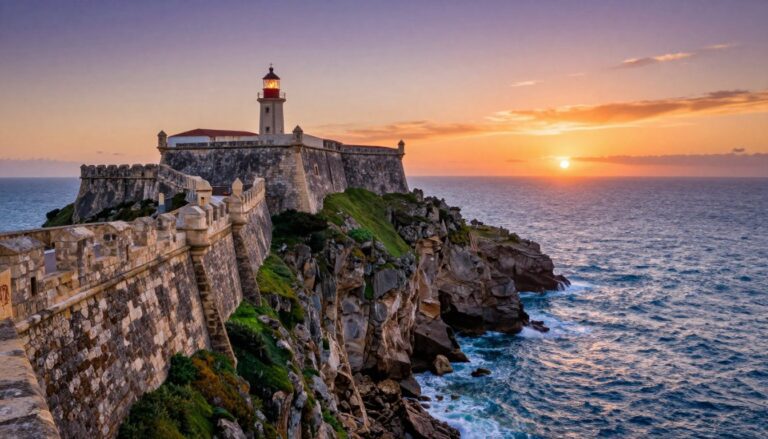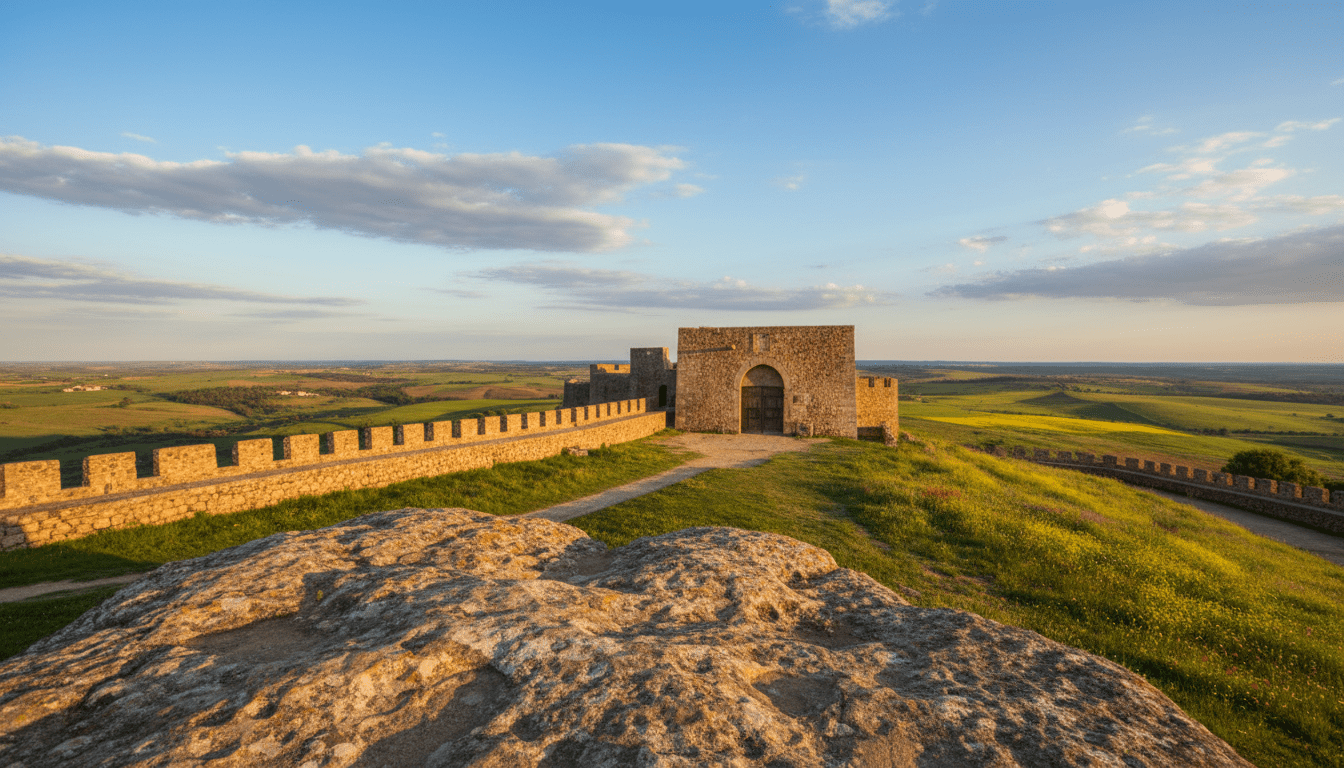
Discover the Enchanting Monsaraz Castle in Portugal
Step into a storybook hilltop village where whitewashed streets and cobblestones lead you to sweeping valley views. This short guide will help U.S. travelers add a peaceful stop to a broader trip beyond Lisbon and Porto.
The fortified site sits in the Alentejo region and feels largely pedestrian-friendly because cars can’t circulate inside the walls. That calm helps you savor simple pleasures: sunsets, local wine, and slow walks through narrow lanes.
Read on for a clear guide to the place’s history, the best viewpoints over Alqueva Lake, what to see inside the walls, and practical tips for Americans planning a day visit. In a few short years this spot has become a must-see for travelers seeking unique views and a quieter village vibe.
Expect a flow that moves from village atmosphere to fortress history, then to things to do, food and wine, lake experiences, nearby day trips, and logistics for U.S. visitors. The castle is the centerpiece, but the whole village is the real draw.
Why Monsaraz Is One of Alentejo’s Most Memorable Hilltop Villages
Enter the village and you sense the story. Narrow lanes, a compact layout, and a quiet pace make this place feel timeless. The intact walls frame each approach and set the tone for easy exploration.
A pedestrian-friendly setting with classic details
The whitewashed houses and shaded doorways welcome slow walking. Dark schist underfoot and winding streets naturally slow your pace. That look-and-feel makes every corner a small discovery.
High points and easy photo moments
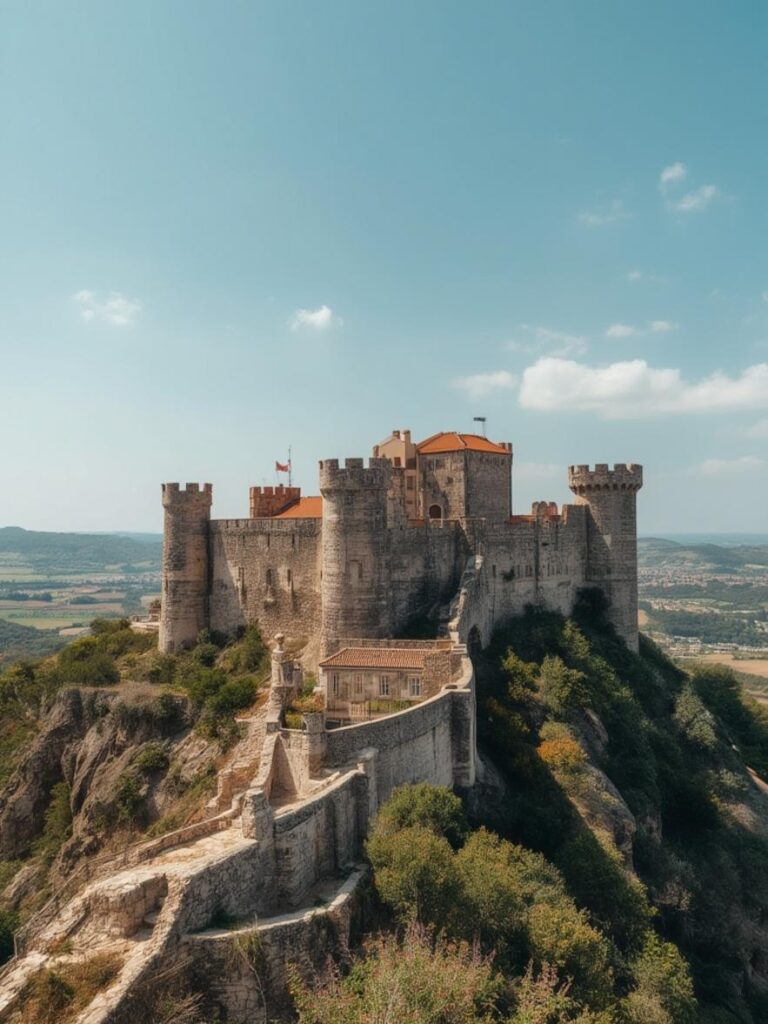
Perched above the valley, the village offers constant viewpoints. Casual wandering turns into repeated photo stops with panoramic views over the Guadiana and toward Alqueva Lake.
Why visitors keep coming back
Minimal to-do pressure, maximum atmosphere. In recent years the village monsaraz won wider attention after a national villages award. For U.S. travelers it feels remote yet reachable as a day trip from Évora. Practical note: cars can’t circulate inside, so comfortable shoes matter more than driving convenience and that information helps plan your visit.
Monsaraz Castle Portugal: A Medieval Fortress Shaped by the Reconquest
This hilltop stronghold was a strategic prize whose control shifted several times in the Middle Ages. In 1167 Geraldo “Sem Pavor” captured the site; it returned to Muslim rule in 1173 and was finally secured by King Sancho II with the Knights Templar in 1232.
From Moorish rule to Christian control: key moments from 1167 to 1232
Clear timeline: 1167 capture, 1173 loss, 1232 reconquest. That span explains why this place was so contested.
Royal construction in the Middle Ages
After reconquest, King D. Afonso III built a new alcázar and five square towers. King D. Dinis completed works to strengthen defenses across the next century.
Defensive design highlights and changing roles
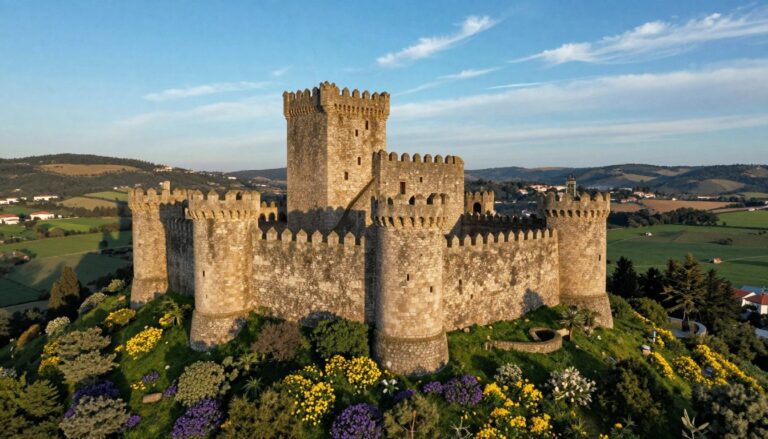
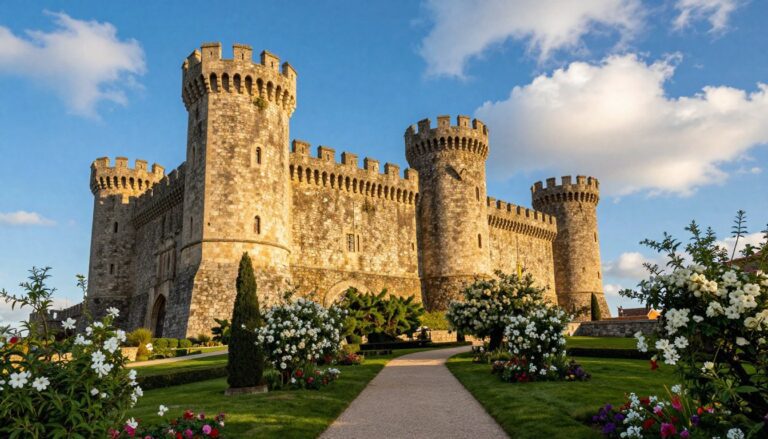
The thick walls, towers, and compact layout show its frontier function: watch, delay, and hold. These elements shaped daily life for soldiers and villagers alike.
Then vs. now and a practical tip
In the 19th century the fortress even became a bullfighting arena—a reminder that structures change with time. Tip: learn this timeline before your self-guided tour; it makes the ruins easier to read as you walk the ramparts.
Quick note: Castelo de Monsaraz is a National Monument, which underscores its historical importance and makes it a must-see on any focused guide of the region.
What to See Inside the Castle Walls
Inside the ramparts, every turn opens to a new view over the plains and lake. Start at the main entrance and follow a relaxed loop to get the best sense of the place without stress.
Walk the ramparts for sweeping panoramas
Walking the ramparts is the top priority. They offer the clearest views of the Alentejo plains and Alqueva Lake. Visit in late afternoon for warm light and long shadows.
Enter through Porta da Vila and note other gates
Your typical arrival is through Porta da Vila. Look for Porta de Évora, Porta de Alcoba, and Porta do Buraco as you explore. These gates and the thick walls are simple, powerful reminders of the site’s defensive past.
Rua de Santiago and Rua Direita: easy streets to wander
Rua de Santiago welcomes you with small cafés, shops, and classic photo spots. It’s the friendliest first stretch to slow down and enjoy the village rhythm.
Rua Direita acts as the main artery: key sights, local character, and an easy way to navigate without a map.
Hidden history and a quick food stop
Take the short detour to the cistern near Porta do Buraco. This tiny site shows how the community managed water and daily survival — a real opportunity to connect with everyday history.
Tip: There are small restaurants and cafés tucked along both streets where a simple break becomes a memorable moment because of the view.
- Simple walking route: Porta da Vila → Rua de Santiago → ramparts → loop back via Rua Direita.
- Prioritize ramparts in late afternoon for best light and atmosphere.
- Spot hidden gates and the cistern to see “history in plain sight.”
| Stop | What to Expect | Why It Matters | Nearby |
|---|---|---|---|
| Porta da Vila | Main entrance and first views | Natural starting point for most visitors | Rua de Santiago |
| Ramparts | Panoramic views over plains and lake | Best spot for photos and orientation | Castle area |
| Rua de Santiago | Shops, cafés, photo spots | Welcoming stretch to slow your pace | Small shops |
| Porta do Buraco / Cistern | Hidden cistern and historic structure | Shows practical survival and water storage | Short detour from Rua Direita |
Churches and Museums Worth Your Time
A short walk from the ramparts, the village’s small churches and museums pack surprising detail into modest spaces. These stops add context to the views and make this guide feel balanced.
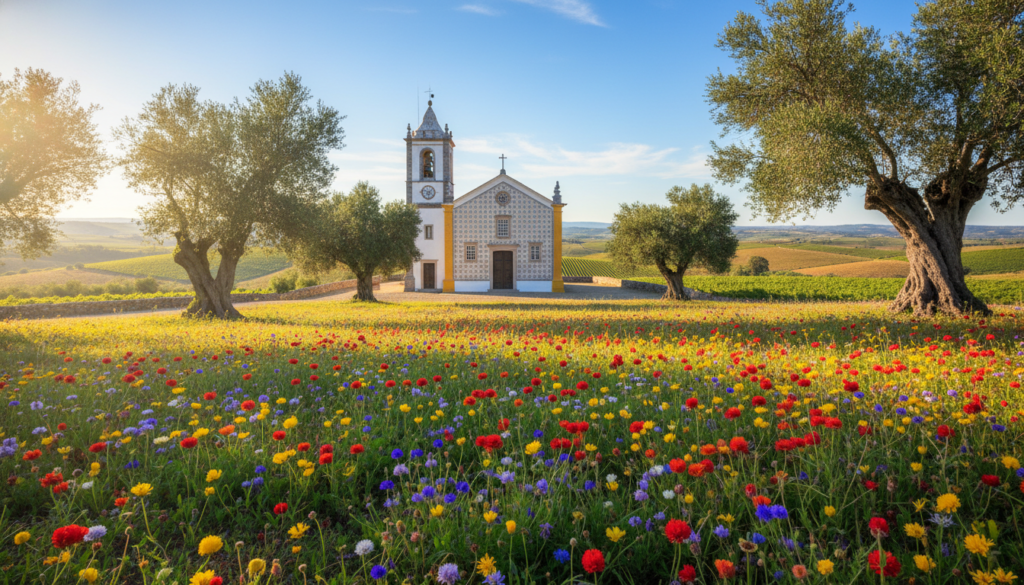
Igreja Matriz de Nossa Senhora da Lagoa: a main interior wow
Igreja Matriz de Nossa Senhora da Lagoa is the one to prioritize if your time is tight. The present church dates to the 16th century in a Renaissance style after an earlier building was lost during a burial crisis linked to the black plague.
Inside, look for the 14th-century marble tomb carved with 14 saints. That carved tomb is a standout detail that helps bring the place’s history to life.
Igreja da Misericórdia and the main square mood
Igreja da Misericórdia sits beside Largo Dom Nuno Álvares Pereira. The square has a calm, local atmosphere and the small church is free to enter. It’s an easy, worthwhile stop that shows daily religious life in a compact setting.
Fresco Museum and the House of the Inquisition
The Fresco Museum displays the late-15th-century “Good and Bad Judge” fresco, discovered in 1958. For practical planning, the House of the Inquisition and the Fresco Museum share a combo ticket for €1.
Hours: Tue–Sun. Apr–Sep 9:30–12:30 & 14:00–18:00; other months 9:30–13:00 & 14:30–17:00. This information helps avoid closed doors.
- Prioritize: Igreja Matriz de Nossa Senhora da Lagoa for interiors.
- Look for: the 14-saint marble tomb inside the main church.
- Add-on: Fresco Museum for cultural context beyond scenery.
| Stop | Highlight | Practical Note |
|---|---|---|
| Igreja Matriz de Nossa Senhora da Lagoa | Renaissance interior; 14th-century marble tomb | Main interior “wow”; prioritize if short on time |
| Igreja da Misericórdia | Small church beside main square | Free to visit; offers local square atmosphere |
| Fresco Museum & House of Inquisition | “Good and Bad Judge” fresco (late 15th c.) | Combo ticket €1; check seasonal hours before your visit |
Alqueva Lake Experiences Near Monsaraz
A shimmering body of water reshaped the plains when engineers dammed the Guadiana, creating new recreational options nearby. In plain English, the alqueva dam formed a vast artificial lake that changed how people use the land and water.
What to do by the water
Praia Fluvial de Monsaraz is about an eight-minute drive from the village. It has a lifeguard, a bar/restaurant, and umbrellas—perfect for a warm-day break.
On-the-water options
Choose relaxed boat trips from marinas like Amieira Marina or active kayaking tours for a closer view. These activities suit families and solo travelers alike.
Pick your pace and the night sky
If you’re short on time, make a quick scenic stop to see the alqueva lake from above. For more, plan a half-day to swim, paddle, or join a boat cruise.
The area is part of the Dark Sky reserve. After sunset, the clear sky and low light pollution make night stargazing at the Dark Sky Alqueva Observatory unforgettable.
| Option | Distance | Why try it |
|---|---|---|
| Praia Fluvial | 8 min drive | Swim, relax, facilities on site |
| Kayak tours | Depart from nearby marinas | Active exploration of the reservoir |
| Boat trips | Amieira Marina | Scenic and easy for all ages |
Wine, Olive Oil, and Local Flavor in Reguengos de Monsaraz
A short drive from the hilltop village, Reguengos de Monsaraz is the practical hub for tasting the region’s best bottles and oils. Pick a relaxed pace so you turn sampling into an experience, not a checklist.
Where to taste and who to pick
Anchor options: Herdade do Esporão and CARMIM (Cooperativa Agrícola de Reguengos de Monsaraz) are reliable choices for wine tasting. Other notable stops include Adega José da Fonseca and São Lourenço do Barrocal for a more upscale tasting and lunch.
Olive oil and what a visit teaches you
Many estates offer olive oil tastings and a look at the mill. A guided tasting links the vineyard and grove scenery to what lands on your plate. Guests learn production steps and sensory cues for identifying quality oil and wine.
Where to eat by mood
- Viewpoint restaurants in the village: Taverna Os Templários, Sabores de Monsaraz — great for easy lunches with a view.
- Country dining: Barrocal restaurant at São Lourenço for a special meal.
- Tapas and casual: Chafarica Tapas & Wine Bar or Sem-Fim in an old mill for relaxed evenings.
Cheat sheet: Order Açorda Alentejana or Porco Preto, and save room for Sericaia with Elvas plums. Make the most of this opportunity by pairing a long lunch with a wine tasting, then return to the village for sunset — a full, slower day that ties taste to place.
| Stop | Why go | Recommended |
|---|---|---|
| Herdade do Esporão | Large estate, wine & oil tastings | Book ahead |
| CARMIM | Co-op with approachable tastings | Good for short visits |
| São Lourenço do Barrocal | Fine dining + winery experience | Reserve for special meals |
Best Day Trips and Nearby Stops Beyond the Village
The area around the hilltop village offers easy add-ons for a single day trip. Pick a theme—crafts or prehistory—and build a relaxed schedule that still leaves time to return for golden-hour views.
São Pedro do Corval: pottery lanes and artisan shops
São Pedro do Corval is the largest pottery center in the region. The main road is lined with small olarias where you can browse or buy hand-thrown wares.
Try Olaria Tavares if you want a concrete stop. Many shops welcome drop-ins and some offer a short pottery tour or hands-on experience.
Megalithic sites: Xerez Cromlech and nearby menhirs
The prehistoric landscape is surprisingly close. Xerez Cromlech sits less than five minutes by car and includes roughly 50 granite menhirs, each about 1.2–1.5 m tall.
Key facts: discovered in 1969 and dated to the early 4th–mid-3rd millennia BC. Other notable sites include Olival da Pega dolmens, Bulhoa Menhir, and Outeiro Menhir.
Reguengos de Monsaraz: a change of pace
For a townier stop, head to Reguengos de Monsaraz. Praça de Liberdade, Igreja de Santo António, a bullring, and a public garden give a different slice of daily life.
How to combine these places: choose pottery or megaliths as your main focus, add a quick Reguengos pause, then return to the village for sunset. This keeps the day trip flexible without packing too many activities into a few hours.
- Pottery route: São Pedro do Corval (shops + Olaria Tavares) → Reguengos → return.
- Megalith route: Xerez Cromlech + nearby menhirs → Reguengos → return.
- Guided tour option: look for half-day tours that pair one theme with a short town stop.
| Place | Why go | Time needed | Distance from village |
|---|---|---|---|
| São Pedro do Corval | Pottery shopping; hands-on experience | 1–2 hours | 10–15 min drive |
| Xerez Cromlech | Prehistoric menhirs; easy access | 30–60 minutes | <5 min drive |
| Reguengos de Monsaraz | Urban sights, cafés, town atmosphere | 1–2 hours | 15–20 min drive |
How to Plan Your Visit From the United States
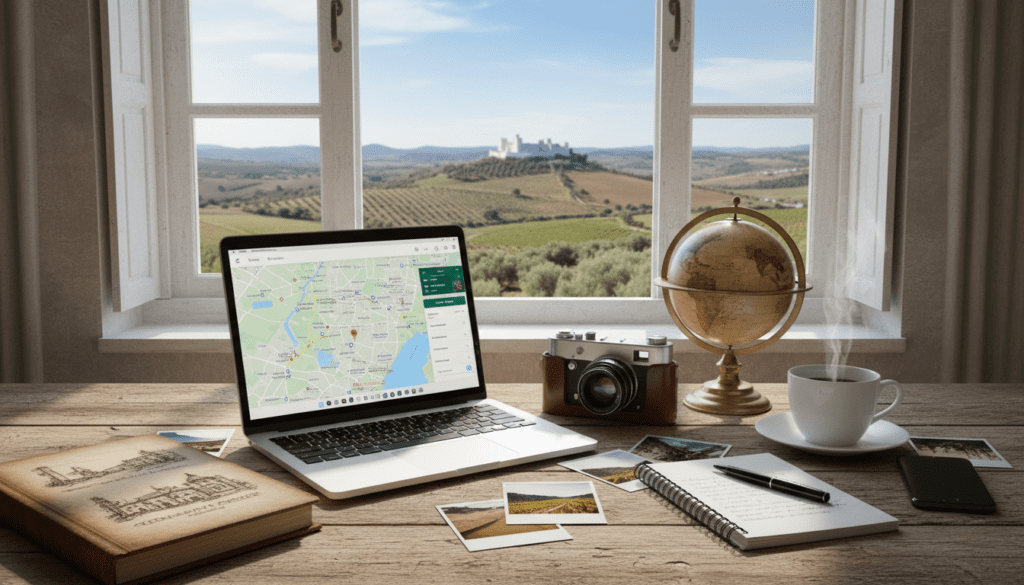
Plan your trip so travel times and transport match a relaxed day in the village. Most U.S. visitors fly into Lisbon, rent a car, and drive roughly 2h10 (184 km) to reach the area. A rental gives the flexibility to stop for viewpoints, wineries, and Alqueva lake activities.
Getting there via Lisbon
Drive times matter for itinerary math: Lisbon → village ≈ 2h10; Évora → village ≈ 52 min (54 km).
Why rent a car: it lets you add lake stops, wineries, and rural viewpoints on the same trip.
Visiting from Évora
From Évora, treat this as an easy day trip. Start early to beat crowds and aim for late afternoon on the ramparts for the best light and quieter streets.
Parking and access
Cars can’t circulate inside the walls. Park in the lots near the gates and walk in. Wear supportive shoes for cobblestones and short climbs.
When to go
Best seasons: April–June and September–October for mild weather. Summer is hot but ideal for Praia Fluvial and lake time. December offers festive charm, and September sometimes hosts local festas.
How long to stay
One hour gives a quick look; a half-day lets you enjoy a meal and wander. A full day is best if you add a lake visit or a winery experience.
Guided tours and no-car options
No car? Take Rede Expressos (Sete Rios → Reguengos ~2h35) then a taxi or local bus. Organized day tours from Lisbon or half-day tours from Évora often include transport, wine tasting, or a combined town visit.
Where to stay
Accommodation inside the walls is limited. For countryside comfort and standout views, consider São Lourenço do Barrocal or Montimerso Skyscape Countryhouse. Casa de São Bento is a strong in-town rental option. Évora is a convenient base with more dining and lodging choices.
- Lodging tip for guests: choose rural estates for quiet views, Évora for convenience, or an in-town rental only if it fits your dates.
- Quick packing: water bottle, sun protection in summer, layers for spring/fall evenings.
| Need | Practical detail | Why it matters |
|---|---|---|
| Drive time from Lisbon | ~2h10 (184 km) | Use for daily itinerary planning |
| Drive time from Évora | ~52 min (54 km) | Good for same-day returns |
| Parking | Lots outside the walls; walk inside | Comfortable shoes and short walk required |
| No-car options | Bus to Reguengos + taxi or guided tours | Simplifies logistics without driving |
Conclusion
Make room in your Alentejo route for Monsaraz and its small hilltop charm. The monsaraz castle and compact village deliver dramatic ramparts, whitewashed lanes, and wide views with very little effort.
Walk the walls, photograph the narrow streets, and linger on the ramparts as light changes. These simple actions are the best way to take in the view and feel the place.
Choose add-ons that match your mood—lake downtime, winery visits, pottery shopping, or quick megalith stops. If you’re tight on time, go early in the day; stay later to catch golden hour and the dark-sky night.
Treat this site as part of a larger story: medieval history, local food and wine, and a sky that can be as memorable as the scenery around the 13th century stronghold in the region.