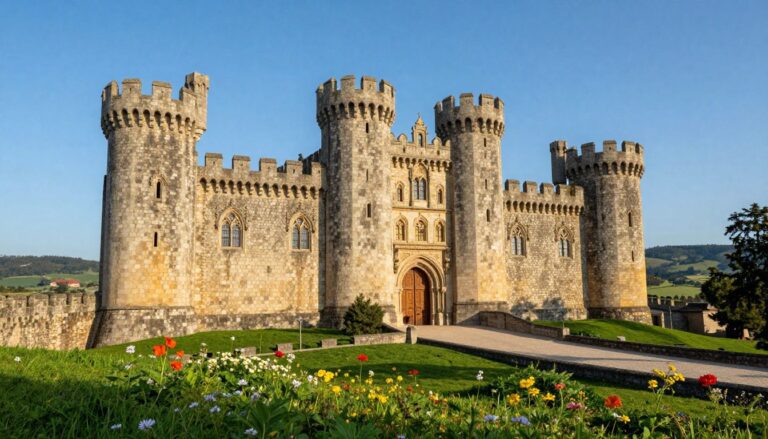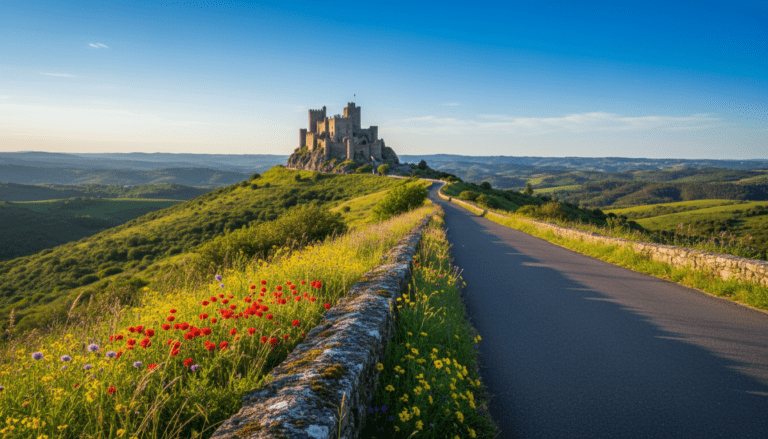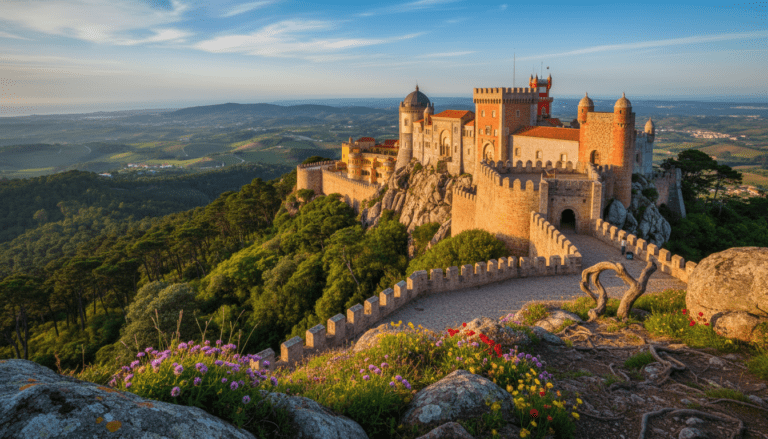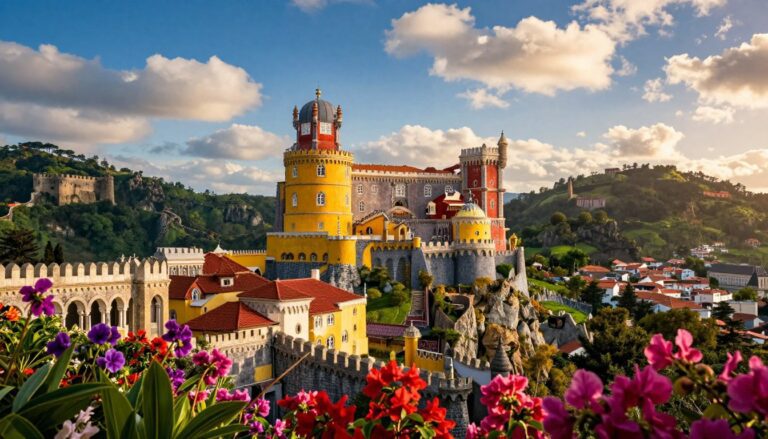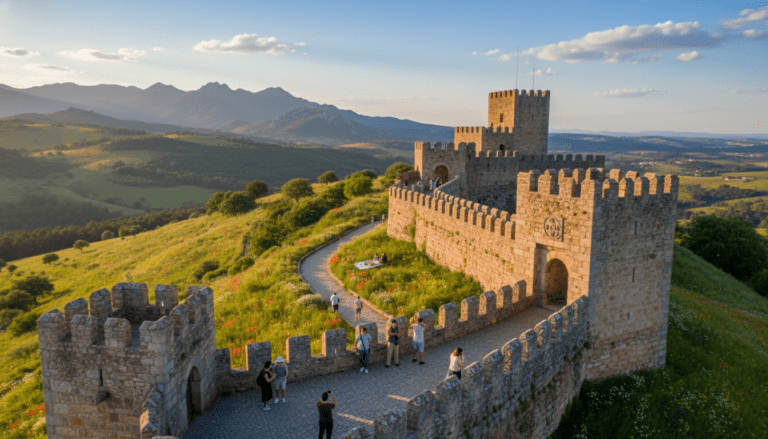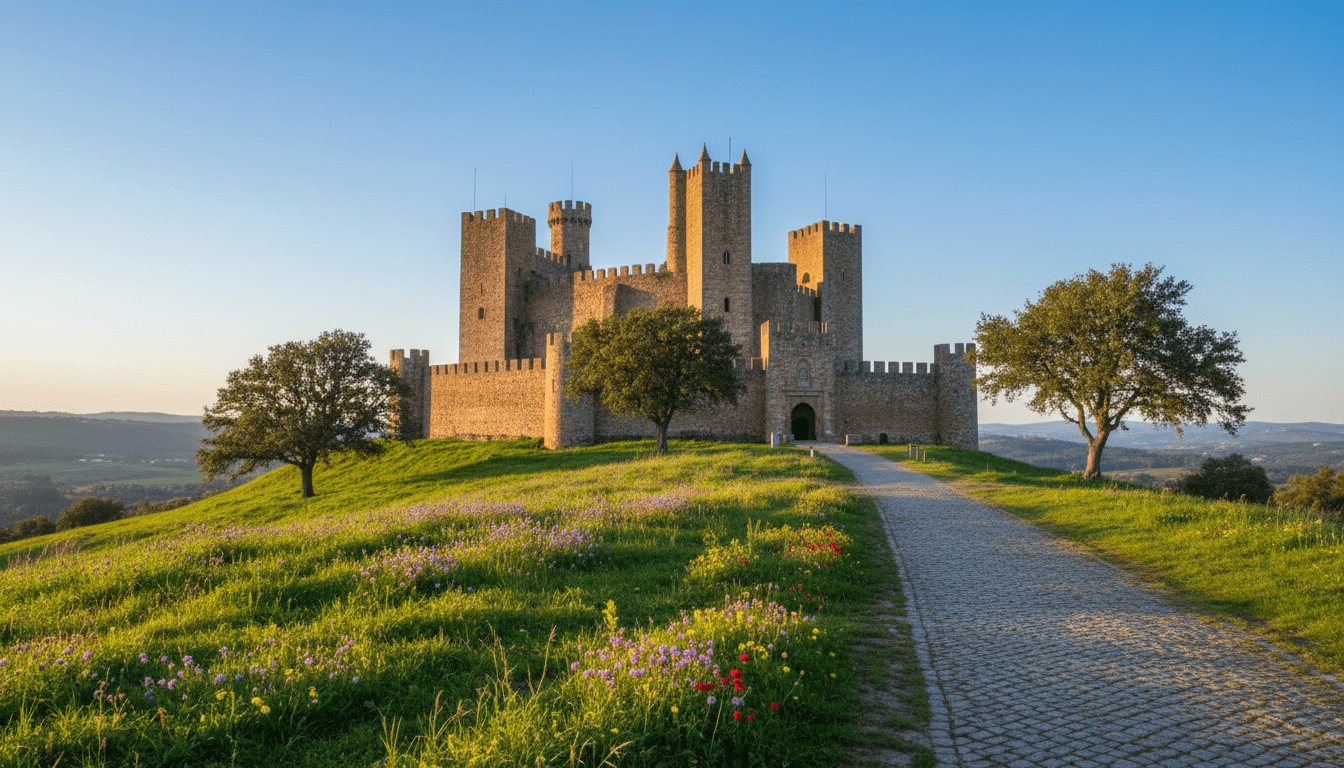
Embark on the Ultimate Portugal Castle Road Trip
Imagine exploring a nation not just by its cities, but through the stone sentinels that have guarded its history. This journey invites you to do just that, tracing a line of magnificent fortresses that tell a story of independence and defense.
This beautiful country became independent in 1143. For centuries, a powerful neighbor posed a constant threat. The solution was a mighty network of defensive structures along the border.
This strategy was so successful that the nation’s frontiers have remained largely unchanged since 1297. You’re driving through living history.
This adventure offers a third legendary route, distinct from the famous Nacional 2 or the coastal lighthouse trail. It’s a unique north-to-south itinerary following the historic border region.
You’ll gain a deep appreciation for military planning. Seeing these sites in sequence reveals the brilliant strategy behind their placement and vantage points.
Your drive will take you from wild Atlantic cliffs, through mountainous national parks, all the way to the sunny southern beaches. It’s more than sightseeing; it’s a passage through time.
Introduction to Portugal’s Historic Castles
More than just stone and mortar, these structures are chapters in a living history book. Portugal’s castle heritage represents centuries of strategic thinking and national identity. Each fortress tells a unique story about the people who built and defended it.
You’ll encounter remarkable variety along the border region. From Gothic fortresses to baroque Vauban-style designs, medieval keeps to star-shaped bastions. Each architectural style marks a different period in military history.
These places served multiple purposes over time. They were defensive strongholds, royal residences, and administrative centers. Many have been beautifully preserved for modern visitors.
Exploring them offers incredible educational value. You learn about military strategy, vantage points, and how locations were meticulously chosen. Their presence shaped the towns and villages around them.
Today, peaceful relations between European neighbors allow free exploration. You can appreciate the historical significance without conflict’s shadow. This journey reveals a connected narrative about a country’s determination to maintain independence through time.
The Legacy of Portuguese Castles and Fortresses
Walking through these ancient fortifications, you’re tracing the very blueprint of a nation’s survival. For centuries, a powerful neighbor posed a constant threat. The response was a brilliant network of strongholds along the entire eastern border.
This defensive heritage is a physical history book. Each period left its mark on the stone. You’ll see a lot of variety, from thick medieval walls to intricate star-shaped designs.
Location was everything. Builders chose the highest point for maximum visibility. This allowed communication between sites. It controlled important river crossings and trade routes.
These structures were constantly updated. Kings invested heavily over each century. They adapted designs for new weapons like cannons. It’s a bit like seeing technology evolve in stone.
| Historical Period | Architectural Style | Key Defensive Feature |
|---|---|---|
| Medieval (12th-14th C.) | Romanesque & Gothic | Tall, sturdy walls & keeps |
| Renaissance (15th-16th C.) | Transitional | Thicker walls for artillery |
| Baroque (17th-18th C.) | Vauban-style | Angled bastions & star shapes |
Today, they symbolize peace and identity. Modern preservation ensures we can all learn from this legacy. Many are now protected UNESCO sites, celebrating their universal value.
Planning Your Ultimate Portugal Castle Road Trip
A successful journey through history requires a solid plan, not just a sense of adventure. This section gives you the essential tools.
You’ll learn how to structure your days for maximum enjoyment. We cover the best route and key logistics.
Itinerary Tips and Must-See Sites
The classic route runs north to south. It connects about 15-20 major fortresses.
Allow 10 to 14 days for a comfortable pace. This gives you enough time to explore each site fully.
Some stops need just an hour. Others deserve half a day. Pacing is crucial to avoid burnout.
Base yourself in charming regional towns. They offer great hotels and local cuisine. This balances history with culture.
| Trip Pace | Recommended Duration | Best For |
|---|---|---|
| Leisurely Explorer | 12-14 days | Deep dives, local culture, photography |
| Balanced Traveler | 9-11 days | Seeing all major sites with good pace |
| Highlights Focused | 7-8 days | Top castles only, efficient driving |
Pack snacks and water. Weather can change in the mountains. Checking your car’s tire pressure is a smart move.
Rental Car and Logistics
Driving here is easier than many expect. Roads are smooth and well-maintained.
You will encounter roundabouts, but traffic is usually light. Always keep right except to pass.
An international driver’s license is a good idea. Make sure your rental includes a Via Verde device.
This small transponder handles highway tolls automatically. It saves you time and hassle.
Having your own car offers the best flexibility. You can explore small villages and hidden gems at your own pace.
Exploring the Gothic Heritage: Vila Nova de Cerveira Castle
Nestled where the river meets the border, your initial stop offers a perfect introduction to the region’s defensive legacy. This charming town provides spectacular views of both the Atlantic and the neighboring country.
Architectural Features
The Gothic castle is modest and oval-shaped. Its design reflects medieval military needs perfectly.
Look closely at the curtain walls. You will see different stonework from various eras. In the 17th century, baroque Vauban-style bastions were added for extra strength.
Local Attractions and Urban Integration
The old fortress’s layout still shapes the town. You can see its influence in the grid of streets below.
Today, history blends with modern art and nature. Riverside walks, hilltop lookouts, and local cuisine create a full cultural experience.
| Activity Type | Experience | Best For |
|---|---|---|
| Cultural Heritage | Explore manor houses & typical architecture | History enthusiasts |
| Nature & Scenery | Riverside eco-trails & hill viewpoints | Photographers & hikers |
| Local Flavors | Sample exceptional Minho region gastronomy | Food lovers |
Take your time here before heading south. This town is a wonderful first stop that sets the tone for the entire journey.
Defensive Fortifications: Valença do Minho and Melgaço Castles
Step into a living fortress at Valença do Minho, then ascend to the watchful heights of Melgaço Castle. These two sites were critical for defending the northern frontier.
Historical Significance
Valença’s 17th-century fortress overlooks the River Minho, facing the Spanish city of Tui. It witnessed decisive battles for independence.
Walking its streets today, you pass emblazoned houses and adorned churches. This town within walls is a vibrant historical center.
Melgaço Castle sits atop a hill, built on an ancient watchtower. It reinforced the young kingdom’s authority. Its superb views over the mountains were a key tactical advantage.
Visitor Tips for a Memorable Experience
Explore Valença’s fortress on foot. Park outside the main gates to navigate the narrow lanes easily. Visit early to avoid crowds.
Melgaço is the nation’s northernmost town, part of Peneda-Gerês National Park. Combine your castle visit with local river fishing or mountain hiking.
Both locations offer a deep dive into how border towns lived and defended themselves for centuries.
Journey Through Medieval Towns: Montalegre and Chaves
Venture off the main path to discover two medieval gems where history is etched into every cobblestone and fortress wall.
Montalegre Castle was a long-term project. Its construction began under King Afonso III and continued through the reigns of King Dinis and King Afonso IV.
It was finally completed in 1331. The stronghold features four imposing square towers connected by defensive walls.
This town sits in the beautiful Cávado River valley. It’s surrounded by the mountains of Gerês, Barroso, and Larouco.
Quiet villages dot the landscape here. Traditional farming still sets the pace of life for the day.
As the capital of the Barroso region, Montalegre is a food lover’s dream. Smoked meats are the local specialty.
The place is also known for its vibrant Friday the 13th celebrations. These events build up to exuberant Halloween Nights.
Further east, the ancient city of Chaves awaits. Its castle has a fascinating, layered past.
The fortress was built on top of old Roman walls. Over time, it saw improvements by Suevi, Alans, Visigoths, and Muslims.
Portuguese kings later finished the keep. The structure showcases classic medieval features with a rectangular floor plan.
Chaves lies in a graceful, fertile valley along the Tâmega River. It’s just kilometers from the Spanish border.
Spending time here feels like walking through a living museum. Every stone in this city seems to hold a story.
Strategic Border Defense
Both locations were vital for controlling this mountainous frontier. Their high positions offered clear views of approaching forces.
Insider Recommendations
- Plan at least one full day to explore each town properly.
- In Montalegre, seek out a local tavern to sample the legendary smoked meats.
- For the best photos of Chaves Castle, walk along the riverbanks in the late afternoon.
- Check the calendar before your day of travel. Visiting during Montalegre’s unique festivals adds an unforgettable cultural layer.
Bragança Castle: A Symbol of National Defense
Few fortresses capture the spirit of national resilience as powerfully as the colossal keep of Bragança Castle. It is widely considered one of the best-preserved medieval structures in the country.
Its massive size creates a striking silhouette against the sky. From the top of its walls, you gain spectacular views across vast land to the Montesinho mountains.
The keep is a Gothic masterpiece. It’s built with schist masonry and granite supports.
Inside, multiple floors feature barrel vaults reinforced by full arches. The majestic top has cylindrical sentries and crossed arrowheads.
This location was crucial for border defense for centuries. Celts, Romans, and Arabs all occupied this territory first.
| Historical Layer | Key Development | Lasting Significance |
|---|---|---|
| Ancient Foundations | Occupation by Celts, Romans, and Arabs | Strategic value recognized for millennia |
| Medieval Consolidation | Special charters granted by kings since 1187 | Firm establishment of Portuguese control |
| Royal Elevation | Elevated to city status in 1464 | Became an administrative and cultural hub |
| Modern Role | Capital of its district today | Historic city center preserved around the fortress |
Plan to spend a full day here. Explore the surrounding medieval town to fully appreciate this castle’s profound historical legacy.
Miranda do Douro Castle – Where History Meets the Sunrise
Witness the first rays of dawn touch Portuguese soil at Miranda do Douro. This border town is the easternmost in the country. Early risers get a special reward here.
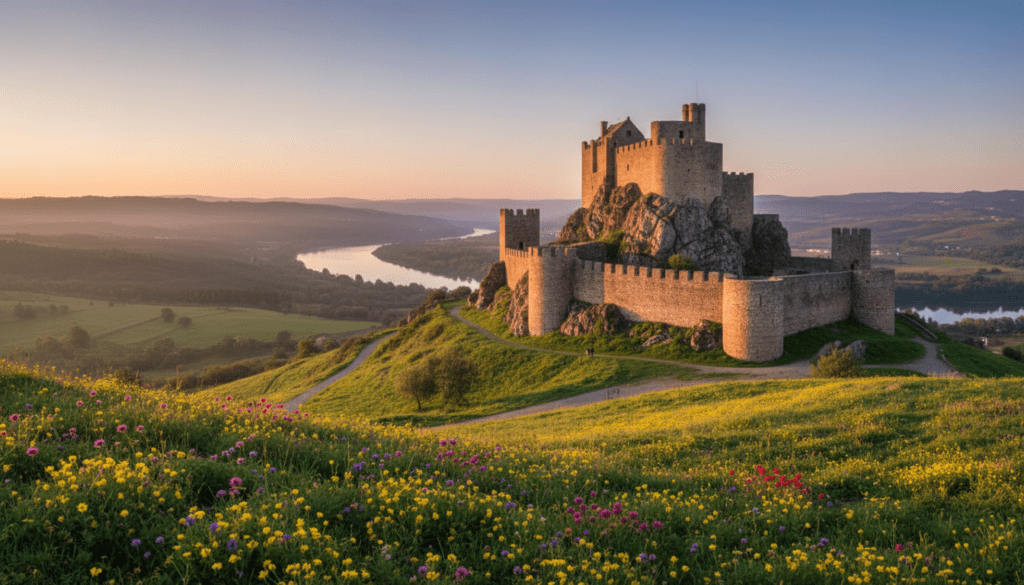
The local castle is incredibly ancient. Its origins stretch back before Portugal was a unified nation. King Dinis built the main Gothic structure.
It has an irregular rectangular plan. A tall keep stands at one corner. Three lower towers complete the design.
A tragic event changed the fortress in the 18th century. A violent explosion in 1762 damaged its walls and Gothic elements. You can still see the scars from that time.
This place has its own unique culture. The Mirandese language is spoken here. It’s a fascinating blend of Portuguese and Leonese traditions.
Local food is a major highlight. Try the famous Miranda steak or lamb. Don’t miss the pork specialty called tabafeia.
Spend a day exploring this historic town along the douro river. It gained city status long ago. The mix of history, language, and cuisine creates an unforgettable experience.
Freixo de Espada à Cinta: The Heptagonal Tower Legacy
Discover a fortress where history whispers from a unique seven-sided tower. This castle is one of the oldest in the Trás-os-Montes region.
It marks the historic border west of the Douro River. The site offers an intriguing look at early defensive design.
Preservation Efforts and Restoration
Built in the 12th century, it started as a simple redoubt with a protective fence. Its job was to defend the town during the kingdom’s early years.
In 1836, the enclosure became a municipal cemetery. This change led to the demolition of some walls.
Yet, it gave the ruins a continued purpose. This action helped preserve other sections over time.
The unique heptagonal tower survived. Known as the Rooster or Clock Tower, its seven-sided shape is rare in military architecture.
| Period | Key Event | Impact on Preservation |
|---|---|---|
| 12th Century | Original construction as a redoubt | Established the foundational layout |
| 1836 | Conversion to a cemetery | Some walls lost, but site gained new function |
| 20th-21st Century | Modern restoration projects | Stabilized tower and remaining walls for visitors |
The town’s name means “sword on the belt of an ash tree.” It sparks curiosity about its origins.
Spend a day here for an authentic glimpse into ancient heritage. It’s a true hidden gem loved by seekers of genuine history.
Castelo Rodrigo: Witnessing Strategic Scenic Views
Perched high on schist cliffs, Castelo Rodrigo commands a breathtaking panorama over the historic borderlands. This hilltop castle was built west of the Marofa and Vieira mountains. It dominates the extensive plateau territory with unparalleled surveillance.
King Dinis conquered this stronghold in 1296. That pivotal moment secured it for the kingdom’s defensive network. The irregular floor plan features a castelejo and barbican marked by semicircular cubicles.
Rectangular towers with full, broken-arch doors reflect medieval military principles. The Alcazaba was once repurposed as the mayor’s residential palace. It was remodeled in the elegant Mannerist period before being razed by the population.
Some structures with rectangular courtyards remain as evidence. This land of enchantment is one of the nation’s most exciting Historical Villages. It serves as the gateway to the Douro International Natural Park.
The stunning landscapes of the Lands of Ribacoa hold incalculable value. Cave paintings here prove prehistoric origins. A vast Roman, Arab, and Jewish legacy adds layers of history.
This town was historically vital for defending territory disputed with Spain. Take time to experience the breathtaking views from the ruins. You’ll understand why this place was so strategically important in the region for centuries.
Almeida Fortifications: A Masterclass in Bastioned History
Prepare to witness military genius carved in stone at the formidable star-shaped fortress of Almeida. This site represents a dramatic evolution from medieval strongholds to geometric Baroque design.
Its history is a lot of back and forth. Muslims first built a castle here on a strategic plateau. Forces from the Kingdom of León conquered it, Muslims took it back, and Portuguese forces finally secured it.
Later, the obsolete medieval structures were transformed. Engineers built the magnificent Praça Forte around the urban perimeter.
Design Elements and Star Layout
This fortress is a perfect example of Baroque military architecture. It features a precise hexagonal star layout with six bastions and six ravelins.
Seen from the air, the combination creates a spectacular 12-pointed star. This design was the pinnacle of pre-industrial defensive planning.
| Component | Quantity | Primary Function |
|---|---|---|
| Bastions | 6 | Provide flanking fire and protect curtain walls |
| Ravelins | 6 | Defend fort entrance and create outer defense |
| Main Gates | 2 | Control access to the fortified town |
Walking the complete circuit takes time. You’ll appreciate the ingenious design that made this one of the best examples in Portugal.
Battlefield Stories and Historical Battles
Almeida has seen epic battles. The most famous was the Siege of Almeida in 1810 during the Third French Invasion.
This fortress played a crucial role in the Peninsular War. Intense combat raged between French and Anglo-Portuguese forces here.
Visit in August for a remarkable historical re-enactment. The siege is recreated with period costumes and deafening cannon fire.
Bring earplugs! The noise is intense but adds to the immersive experience.
Plan to spend a full day in this historic city. Exploring the gates, bastions, and walls is rewarding. By the end of your day, you’ll understand why this place was so vital for centuries.
Sortelha Castle: A Step Back in Time in Beira Interior
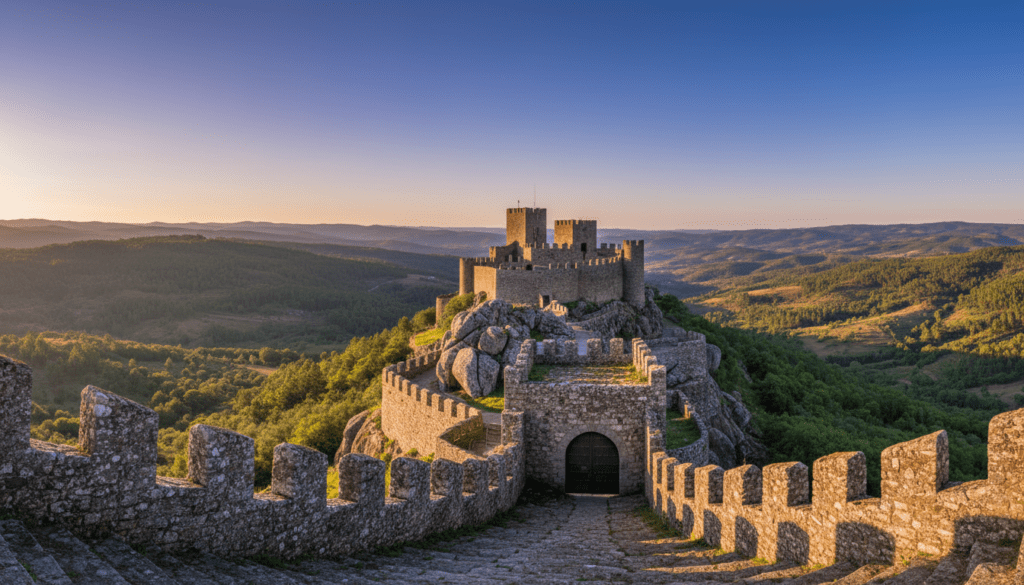
For an authentic glimpse into medieval life, few places compare to Sortelha Castle. This Romanesque fortress sits on a dramatic granite outcrop, set apart from the historic village below.
Its position creates a powerful statement. Builders used the natural rock to boost their defenses.
Restoration Insights
Much of the original structure survives today. Major work happened last century between 1940 and 1952.
This careful process revived the monument. It aimed to respect historical authenticity while making it safe for visitors.
The result is impressive. You can explore one of the best-preserved examples of its kind.
From the top of the towers, the views are simply stunning. You gaze across the rugged Beira landscape.
Walking through the ancient walls, you’ll feel like you’ve traveled back centuries. Take your time here to soak it all in.
Spend at least half a day in this magical town. You won’t see a lot of crowds, just pure atmosphere. It’s a bit like visiting a real open-air museum.
Marvão Castle: Overlooking the Land with Medieval Majesty
Crowning the Serra de São Mamede, Marvão Castle stands as a timeless sentinel over one of the nation’s most vital border routes. This fortress sits at the summit of Serra do Sapoio, deep within a natural park. Its position on a rocky platform encloses the entire medieval town within three concentric defensive lines.
You’ll find more than 800 meters of elevation here. There are also over 800 years of history and countless enchanting features. The majestic walled town creates an impression visitors never forget.
Panoramic Vistas Over the Serra de São Mamede
The views from the ramparts are truly breathtaking. Nobel laureate José Saramago once said you can see “the whole earth” from this spot. The wonderful landscape of the Serra de São Mamede stretches as far as the eye can see.
Spend part of your day simply soaking in this panorama. It’s the perfect reward after exploring the ancient keep and towers.
Cultural Celebrations and Local Traditions
This historic region comes alive with seasonal festivals. Traditional music, crafts, and local gastronomy add vibrant layers to your visit.
Consider hiking one of the park trails that approach the fortress from a different side. It offers a unique perspective on its commanding position. Planning a full day here lets you enjoy both the stunning views and the rich local culture.
Elvas Fortifications: Embracing a UNESCO World Heritage Legacy
Reaching Elvas feels like arriving at the grand finale of a historical epic. Here, the story of border defense reaches its most sophisticated chapter. This immense fortified city is a celebrated UNESCO World Heritage site.
Its origins trace back to an Islamic stronghold. The keep was rebuilt in 1488, but its current look is from the 16th century. It fell into ruins after losing military use.
Modern-Day Significance and Historical Impact
Passionate locals championed its revival. Their efforts made Elvas castle the nation’s first National Monument in 1906. The entire “Garrison Border Town” earned World Heritage status in 2012.
Located just eight kilometers from Badajoz, Spain, it was the key border stronghold. Today, it’s an emblematic city of the Alentejo region.
| Fortification Component | Notable Examples |
|---|---|
| Defensive Walls & Forts | Islamic, medieval, 17th-century walls; Forts of Santa Luzia and Graça |
| Engineering Marvel | The magnificent Amoreira Aqueduct |
| Cultural Heritage | Nearly 40 churches/convents; over 30 fountains, arches, and pillories |
There’s a lot to see beyond the ramparts. The sheer scale of religious and civil architecture makes exploration deeply rewarding.
Additional Must-Visit Stops and Hidden Gems Along the Route
Beyond the border strongholds, this nation offers a wealth of cultural and scenic treasures. Adding these famous spots can wonderfully enrich your road trip experience.
If you’re driving between Lisbon Porto, consider a stop in Óbidos. This charming medieval town has its own fortress and a famous wall walk. The beach town of Nazaré is known for giant waves, but they are only visible from October to February.
The university city of Coimbra is home to one of Europe’s oldest libraries. Fátima provides a spiritual contrast as a major pilgrimage site. These places make great breaks along way.
For relaxation, the Algarve region boasts stunning beaches and a famous coastal hike. Inland, the Douro Valley is a celebrated wine region. Visit the Douro Valley in fall for the beautiful grape harvest.
Other lovely options include Sintra with its fairytale palaces and Cascais for a historic beach vibe. Aveiro is called the “Venice” of the country for its canals. Évora and Guimarães are also historic cities worth a day. Choose stops that fit your interests and trip schedule.
Conclusion
Completing this historic route leaves you with more than just photos. It offers a profound connection to centuries of resilience and independence. You’ve traced a nation’s story through its mighty castle network.
The journey provides deep insights into military strategy. You also experience charming towns, delicious food, and stunning views along the way. These elements combine to create a rich cultural tapestry.
As your trip ends, take time to savor the memories. Make sure your camera captured favorite places. Consider bringing home a bottle from a famous wine region as a souvenir.
You’ll likely leave with a list of things to see next time. This exploration offers a meaningful connection to history. It creates lasting memories that will call you back to explore more.