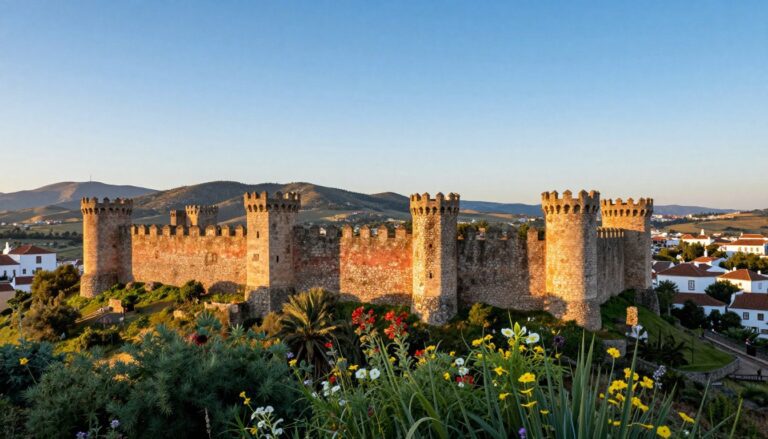
UNESCO World Heritage Castles: Explore Portugal’s Gems
Welcome to a journey through stone and history. This guide unlocks the doors to some of Europe’s most stunning fortifications.
Nestled on the Iberian Peninsula’s edge, this nation holds a treasure trove of culture. Its compact size belies an incredible density of unesco world heritage landmarks. These recognized sites paint a vivid picture of a rich past.
These are not just old walls. They are living chapters from a saga of exploration and royalty. Each site tells a unique story, earning its world heritage status for outstanding value.
You will discover majestic strongholds and serene monasteries with battlements. Imagine climbing ancient towers for ocean views. Picture wandering through palaces high on hills. This is your ultimate companion for an authentic trip into the past.
Introduction to Portugal’s UNESCO Heritage
From sun-drenched coasts to rugged inland hills, a network of protected treasures awaits. Portugal’s collection of world heritage sites is remarkably diverse. These locations earned their prestigious badge for outstanding universal value.
This recognition means they are considered vital to all humanity. The designation helps preserve these irreplaceable heritage sites for future generations. It’s a true honor for any nation.
You’ll find towering monasteries, imposing medieval fortresses, and entire historic city centers. Each site is a unique chapter in the nation’s long history. Together, they tell a epic tale of maritime exploration, royal dynasties, and artistic innovation.
Visiting is more than sightseeing. It’s an immersive experience that connects you with the people and events of past centuries. Let’s explore what makes these monuments so special.
UNESCO World Heritage Castles in Portugal
When exploring these celebrated locations, you’ll find the definition of a ‘castle’ is wonderfully broad.
These monuments were often multi-purpose. A strategic coastal position meant many served as royal homes, religious centers, and defensive structures. Their architecture tells this layered history.
You can see sturdy Romanesque walls, soaring Gothic arches, and the unique Manueline style. This style celebrates the Age of Discoveries with nautical motifs.
From northern medieval strongholds to romantic hilltop palaces near Lisbon, the geographic spread is impressive. Each place has a unique tale.
| Type of Site | Key Features | Example Preview |
|---|---|---|
| Traditional Fortress | High stone walls, defensive towers, military origin. | Guimarães Castle |
| Fortified Monastery | Built by military orders, combines church and fortress. | Convent of Christ in Tomar |
| Palatial Complex | Royal residence with decorative styles, often on a hill. | Palácio Nacional da Pena |
Some sites hold Knights Templar secrets. Others whisper royal love stories or showcase unfinished Gothic masterpieces. This overview helps you see which stories call to you.
Tower of Belém: Portugal’s Maritime Fortress
In Lisbon’s historic Belém district, an ornate limestone tower rises from the water’s edge, its story etched in stone. The Tower of Belém is far more than an old fortress. Built in the early 16th century, it served as a ceremonial gateway to the city and a vigilant guardian of the Tagus River estuary.
Iconic Manueline Architecture
Look closely at the stonework. The architecture is a stunning example of the Manueline style. This unique design celebrates the Age of Discoveries.
Intricate carvings of nautical ropes, anchors, and armillary spheres cover the facade. You can even spot fantastical sea monsters peering out from the limestone. Every detail tells of a nation deeply connected to the ocean.
Historical Significance and Maritime Legacy
This tower was the starting point for legendary voyages. Explorers like Vasco da Gama sailed past it, embarking on journeys that changed maps forever. It was a symbol of Portugal’s vast maritime empire.
Over the centuries, the Tower of Belém adapted. It functioned as a customs house, a lighthouse, and even a prison. Its enduring legacy earned it a spot on the UNESCO World Heritage list in 1983. Today, it stands as a powerful monument to adventure and discovery.
Sintra’s Enchanted Castle Landscapes
Just a short train ride from Lisbon, a magical hilltop town emerges from misty forests. Here, fairytale architecture blends seamlessly with lush nature. This unique cultural landscape sintra earned a special cultural landscape designation, the first of its kind in Europe.
It’s a place where human creativity and the natural landscape sintra have intertwined for centuries.
Palácio Nacional da Pena: A Romantic Marvel
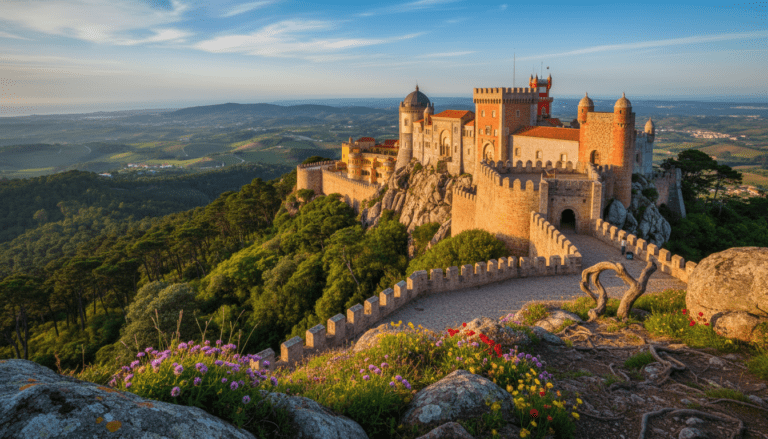
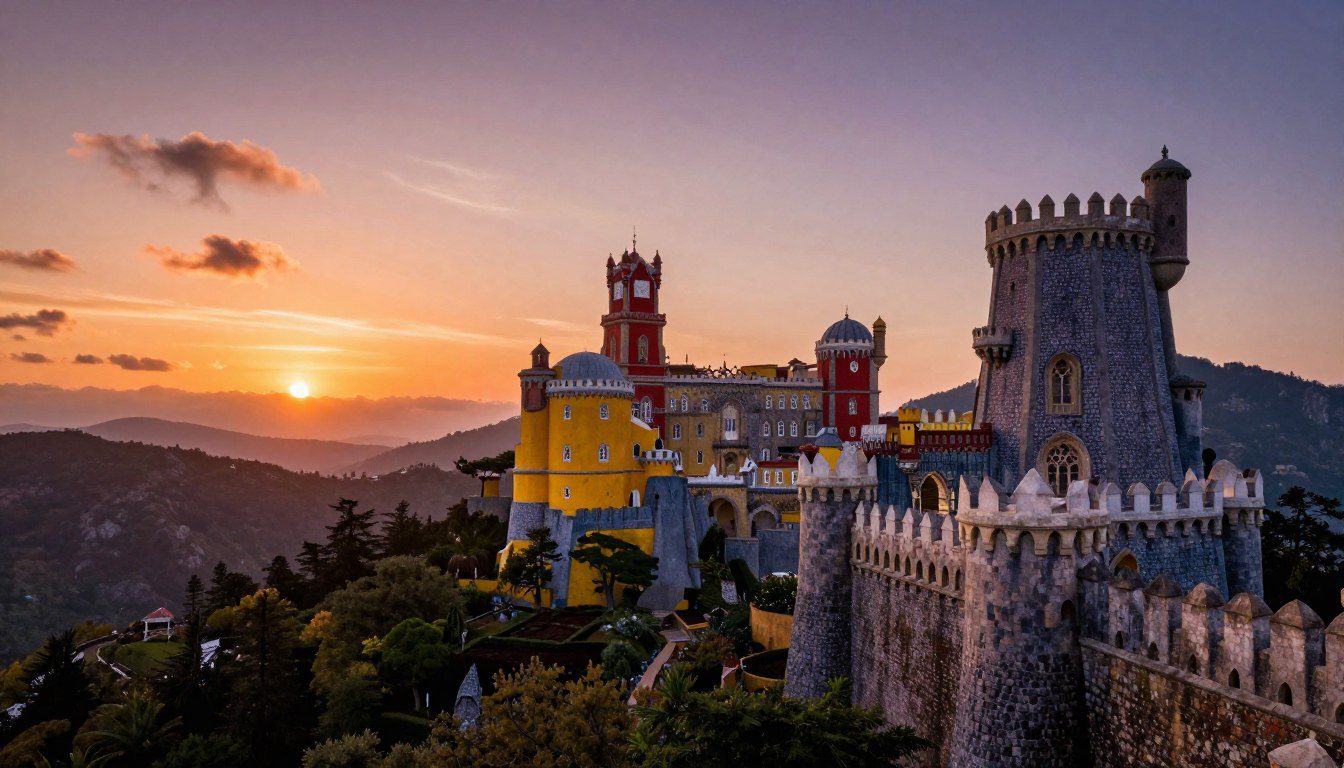
The crown jewel is the spectacular Palácio Nacional da Pena. Its vivid reds, yellows, and blues create a Romantic-era masterpiece. Perched high on a hillside, it mixes Gothic, Manueline, and Renaissance styles.
This 19th-century summer retreat is surrounded by exotic gardens. They invite hours of peaceful exploration among rare trees and hidden viewpoints.
Castle of the Moors: Medieval Mystery
For a stark contrast, visit the atmospheric Castle of the Moors. This 8th-century fortress crowns a neighboring peak. Its ancient stone ramparts wind along the hilltop.
Walking the battlements offers panoramic views and a tangible sense of medieval history. It’s a world away from Pena’s colorful exuberance.
Other treasures like Quinta da Regaleira add layers of mystery with caves and grottos. The town can get busy. Using the hop-on-hop-off buses is a smart way to navigate the steep hills.
The entire landscape is a perfect blend of palaces, gardens, and natural beauty shaped over many centuries.
Guimarães: The Birthplace of Portugal’s Royal Castles
Imagine walking the same cobblestones as Portugal’s first king, in a place where history feels palpably alive. This northern city proudly bears the title “birthplace of Portugal.” Its story began in the 12th century as the nation’s first capital.
King Afonso Henriques is believed to have been born here. The entire historic centre earned global recognition in 2001. It preserves a medieval atmosphere with a wonderfully local feel.
Guimarães Castle: A Historic Landmark
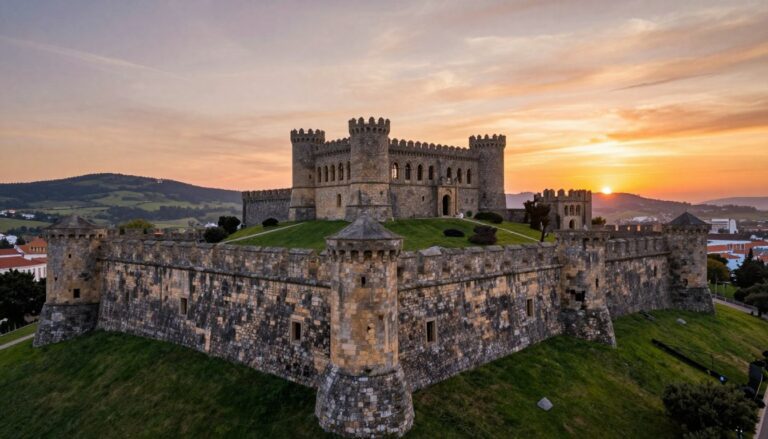
This 10th-century fortress is where legend says the founding monarch was born. Its massive stone walls and battlements symbolize the very foundations of Portuguese independence. You can climb the keep for panoramic views.
Nearby, the 15th-century Palace of the Dukes of Braganza showcases aristocratic life. Its distinctive brick chimneys are a unique architectural sight. It offers a glimpse into the power of noble families.
Wandering the streets of the historic core is a delight. You’ll find beautifully tiled squares like Largo da Oliveira. Colorful medieval buildings with wrought-iron balconies line the narrow lanes.
This isn’t a museum. Locals go about their daily business among the ancient stones. It creates an authentic and photogenic atmosphere that feels genuinely medieval.
| Monument | Key Feature | Century |
|---|---|---|
| Guimarães Castle | Fortress, birthplace of first king | 10th |
| Palace of the Dukes | Aristocratic residence, brick chimneys | 15th |
| Historic Centre | Cobbled lanes, tiled squares | Medieval Core |
Use Guimarães as a base to explore the Minho region. Enjoy traditional cuisine and a welcoming atmosphere. It’s a true discovery for any culture lover.
Convent of Christ in Tomar: Fortress of the Knights Templar
High on a hill in central Portugal, a formidable fortress-monastery guards the secrets of the legendary Knights Templar. This imposing complex served as their powerful headquarters and later for the Order of Christ. Its global recognition came in 1983.
Architectural Brilliance and Spiritual Heritage
The site’s architecture is a stone timeline. You can see Romanesque, Gothic, and lavish Manueline styles. This mix evolved over many centuries.
This spiritual heritage directly fueled Portugal’s Age of Discoveries. The order’s wealth and mission inspired epic voyages.
The Rotunda and Intricate Cloisters
Step inside to find the breathtaking Charola. This 16-sided rotunda was inspired by Jerusalem’s Holy Sepulchre.
Its vibrant colors and ornate art are a stunning surprise. The convent also features a maze of seven beautiful cloisters.
Two were built in the 15th century under Henry the Navigator. Exploring this convent feels like walking through a living history book.
Monastery of Batalha: A Testament to Portuguese Valor
In the quiet town of Batalha, a stone giant stands as a permanent memorial to a nation’s hard-won freedom. This magnificent monastery was built to celebrate the pivotal 1385 Battle of Aljubarrota. That victory secured Portugal’s independence from Castile.
Step inside to feel the ambition of late Gothic design. The soaring nave is supported by enormous central pillars that draw your eyes upward. It’s a masterpiece of architectural art from that defining century.
Do not miss the hauntingly beautiful Unfinished Chapels. This octagonal structure lacks a roof, creating a unique open-air sanctuary. You gaze directly at the sky through intricate, incomplete stonework.
Look for the royal tombs of King João I and Queen Philippa of Lancaster. Intricate carvings and Manueline details cover the walls. Master craftsmen worked on this site for over a hundred years.
A moving modern tribute sits within these ancient walls. Two sentries keep vigil at the Tomb of the Unknown Soldiers. The flickering Eternal Flame honors valor across the ages.
This profound blend of history, faith, and national pride earned its place on the unesco world heritage list in 1983. It remains an enduring symbol of Portuguese determination.
Alcobaça’s Monastic Splendor: A Castle-Like Wonder
Deep in the heart of Portugal’s countryside, a monumental Gothic abbey rises with serene authority. The Monastery of Alcobaça was founded in 1153 by King Afonso Henriques. It is the largest church in the nation.
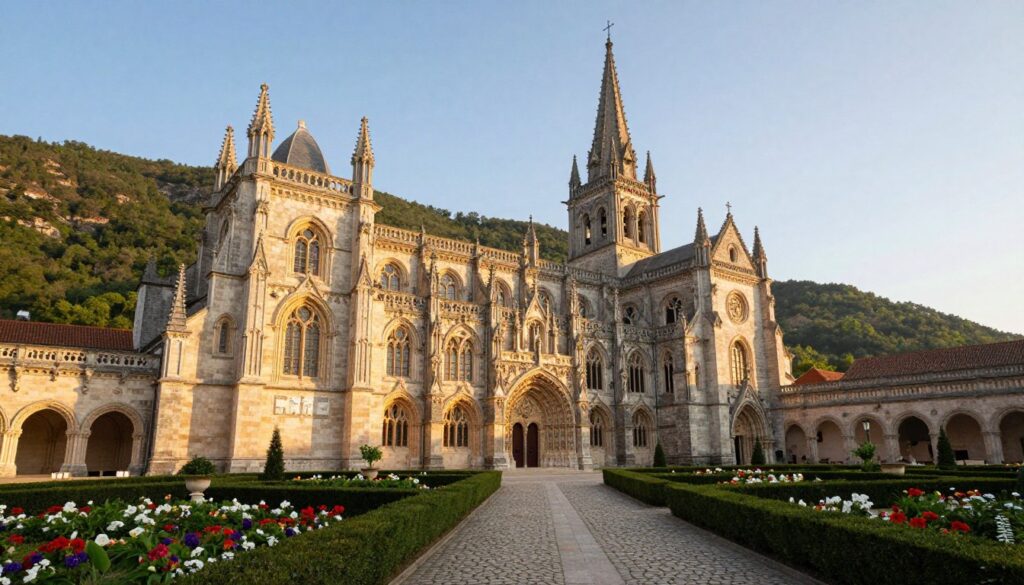
Its massive facade dominates the town square. This shows the power of the Cistercian monks who lived here for years.
Gothic Grandeur and Royal Tombs
Inside, you find the famous tombs of King Pedro I and Inês de Castro. Their tragic love story is like a real-life Romeo and Juliet. The carved stone coffins face each other across the nave.
This symbolizes their promised reunion. It’s a powerful piece of royal history carved in stone.
Walk through the peaceful cloisters next. Gothic arches frame quiet gardens. It feels like stepping back into medieval monastic life.
Don’t miss the enormous kitchen. A stream once ran right through it. This clever design provided fresh water and carried waste away.
Such innovation supported the community for centuries. The entire complex earned its place on the unesco world heritage list in 1989.
Exploring the monks’ dormitory and refectory adds depth. You see how they lived, worked, and prayed. The Monastery of Alcobaça blends grand architecture with a deeply human story.
Évora’s Historic Centre: Castles Amid Ancient Ruins
Tucked away in Portugal’s sun-baked Alentejo plains, Évora feels like a secret kept for centuries. Its entire walled historic centre is a living museum. Recognized in 1986, it spans Roman, Moorish, and Renaissance periods.
The Roman Temple of Diana and Chapel of Bones
The stunning Temple of Diana anchors the city. Its elegant Corinthian columns date to the 1st century AD. It’s one of the best-preserved Roman sites on the peninsula.
Then, find the unforgettable Chapel of Bones. Franciscan monks built it in the 16th century. Its walls are lined with the bones and skulls of over 5,000 people.
The sobering inscription reads, “We bones here are waiting for yours.” It’s a powerful memento mori.
| Monument | Key Feature | Historical Period |
|---|---|---|
| Temple of Diana | Roman columns, city landmark | 1st Century AD |
| Chapel of Bones | Bone-covered walls, memento mori | 16th Century |
| Évora Cathedral | Gothic fortress-church, museum | Medieval |
| University of Évora | Renaissance college, historic classrooms | 16th Century |
Wandering the maze-like streets is a joy. You’ll find whitewashed homes and quiet squares. The atmosphere is authentic and family-oriented.
This collection of monuments offers a deeply personal heritage experience. It feels wonderfully undiscovered.
Porto’s Urban Heritage: Castles in the Heart of the City
For a different kind of heritage experience, step into Porto. This working city is where daily life unfolds within a spectacular historic setting. Its entire center earned UNESCO World Heritage status in 1996.
It was recognized as an outstanding urban site. The honor celebrates how it preserved its soul while adapting to modern life.
Ribeira District and Historic Charm
The enchanting Ribeira is the historic heart. Narrow medieval streets wind between colorful buildings. They cascade right down to the Douro River’s edge.
This creates one of the nation’s most atmospheric and photographed neighborhoods. It feels wonderfully alive with local chatter.
Architectural treasures are everywhere. Climb the Baroque Torre dos Clérigos for panoramic views. Admire the magnificent azulejo tile panels inside São Bento Railway Station.
The iconic Dom Luís I Bridge connects the banks. Designed by a student of Eiffel, it offers breathtaking vistas of the layered cityscape.
Porto’s story is also flavored by port wine. Historic cellars line the Vila Nova de Gaia riverbank across the water. Here, the famous fortified wine has been aged for centuries.
| Landmark | Type / Feature | Noteworthy Detail |
|---|---|---|
| Ribeira District | Historic Waterfront Neighborhood | Medieval lanes, colorful houses, vibrant atmosphere |
| Torre dos Clérigos | Baroque Bell Tower | Offers stunning panoramic city views |
| São Bento Station | Historic Railway Station | Interior covered in magnificent painted azulejo tiles |
| Dom Luís I Bridge | Double-Decker Metal Bridge | Iconic structure with pedestrian walkways for best views |
| Port Wine Cellars (Gaia) | Historic Wine Lodges | Traditional aging and tasting rooms across the Douro |
The best way to discover it all is on foot. Wander, get lost, and feel the authentic pulse of this remarkable place.
The Douro Valley: Castles in a Landscape of Vineyards
The winding Douro River carves a path through a valley where human endeavor and nature have collaborated for millennia. This is the breathtaking Alto Douro Wine Region, the planet’s oldest officially demarcated wine region.
For over two thousand years, steep slopes have been sculpted into stunning stone-walled terraces. This created a landscape of unparalleled beauty and productivity.
Terraced Vineyards and Cultural Richness
This region is famous for its legendary Douro wine, especially Port. It also produces exceptional reds and whites. The recognition from UNESCO in 2001 celebrates this unique cultural landscape.
It honors generations of winegrowers who shaped this challenging terrain. The vineyards cascade down hillsides like a green and gold patchwork quilt.
The best way to experience the Douro wine region is on a road trip. You can stop at will to photograph vistas and visit tranquil villages.
Alternatively, a leisurely cruise on the Douro River offers a majestic perspective. You’ll see the vineyards rising dramatically from the water’s edge.
Visit historic quintas (wine estates) for tastings and tours. Meet the families behind this Alto Douro tradition. Their skill turns schist soil and sun into world-class wine.
This part of Portugal offers a heritage experience that engages all the senses. It’s a living testament to human ingenuity set within a majestic natural landscape.
Pico Island Vineyard Culture: A Fortress of Tradition
Far out in the Atlantic Ocean, a volcanic island reveals an agricultural masterpiece carved from black rock. The Pico Island vineyard culture is a fortress of tradition against the elements.
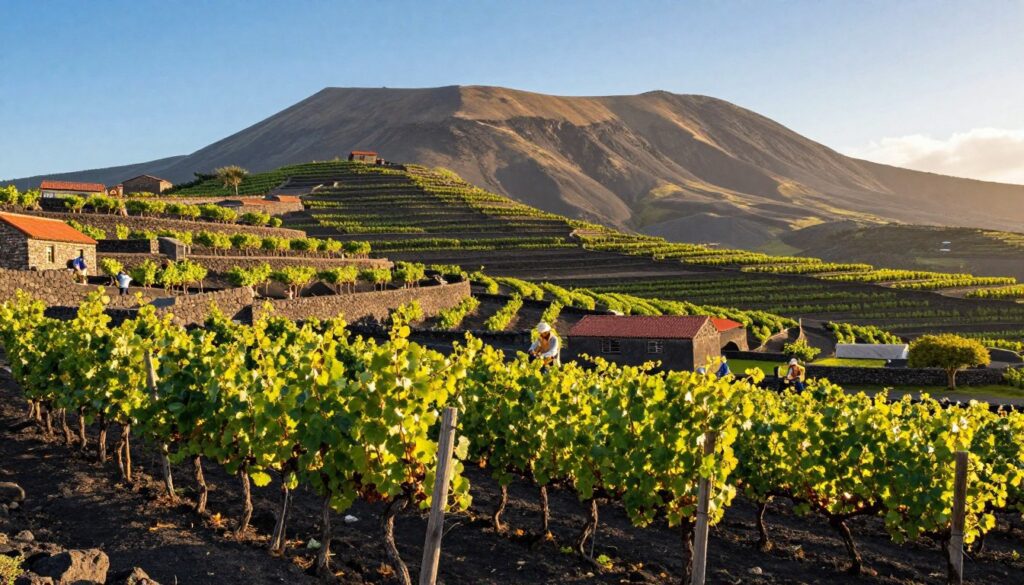
This unique island vineyard system uses small plots called currais. Thousands of miles of black basalt walls shield the precious vines.
Volcanic Soil and Historic Viticulture
The rich volcanic soil and Atlantic climate create ideal growing conditions. Verdelho wine has flourished on Pico Island for over five hundred years.
This remarkable wine region earned global recognition in 2004. It is celebrated as a sustainable cultural landscape of outstanding beauty.
Walking through these ancient vineyards offers a connection to history. The stone walls create a striking pattern against the green vines.
Sample the local wine in coastal villages shaped by generations. This tradition on Pico Island is a powerful symbol of Azorean resilience on this Atlantic island.
Uncovering Hidden UNESCO Heritage Gems Across Portugal
Venture into northern Portugal’s remote valleys to find one of humanity’s oldest art galleries under the open sky. The Prehistoric Rock Art Sites in the Côa Valley offer a stunning glimpse into ancient minds.
This incredible rock art dates back over 20,000 years. Skilled hands engraved horses, aurochs, and deer into the stone. These rock art panels provide a direct window into Paleolithic life.
Together with Siega Verde across the Spanish border, it forms a unique cross-border unesco world heritage site. Recognized in 1998, these heritage sites protect invaluable cultural evidence. They show early human art and symbolism carved into the rock.
You can explore the Côa Valley on guided hikes, jeep tours, or special nighttime visits. The experience is intimate and crowd-free. It connects you directly to our deepest past.
Such landscapes hold stories far older than medieval walls. They complete the rich tapestry of the nation’s recognized treasures. This rock art is a treasure among global unesco world heritage locations.
Planning Your Heritage Tour: Tips and Itineraries
Your adventure among ancient stones begins with smart logistics and a flexible plan. A little preparation ensures you spend less time navigating and more time exploring.
Essential Travel Advice and Booking Tips
For maximum flexibility, a road trip is the best way to see everything. You can fly in and rent a car. Alternatively, take a scenic Brittany Ferries route to northern Spain and drive across.
Popular sites get crowded. Book advance tickets online to skip long lines. Consider visiting early in the morning or later in the afternoon.
In hilly areas like Sintra, use the hop-on-hop-off buses. Picking up a timetable helps. For a quicker option, consider a local tuk-tuk.
Customizing Your Itinerary for Maximum Experience
Match your route to your passions. Popular frameworks provide excellent starting points for any trip.
| Itinerary Type | Best For | Key Highlights |
|---|---|---|
| Lisbon & Porto Combo | City lovers & urban history | Belém Tower, historic Ribeira district, port wine lodges |
| Three Island Azores Tour | Nature & unique landscapes | Pico Island vineyards, volcanic craters, green lakes |
| Alentejo Self-Drive | Flexible adventurers | Évora’s Roman temple, wide plains, hilltop villages |
| Romantic Palaces Route | Architecture & gardens | Sintra’s Pena Palace, lush gardens, Moorish castle ruins |
Balance famous landmarks with quieter gems. This creates a personally meaningful journey, not a rushed checklist. Portugal is wonderful to explore from every direction.
Exploring Portugal: Insights for History and Culture Lovers
The true magic of the nation’s recognized sites lies not just in their beauty, but in their ongoing cultural heartbeat. This compact land packs an incredible density of UNESCO World Heritage sites into a small area. That makes deep exploration wonderfully practical for any traveler.
Local Insights and Must-Visit Sites
Residents know the secrets. Visit iconic spots early to avoid crowds. Enjoy a traditional lunch at a family-run tavern nearby. Many locations host festivals that bring their history to life with music and reenactments.
Pairing related landmarks creates rich thematic journeys. This table suggests perfect combinations for enthusiasts.
| Thematic Experience | Site Combination | Cultural Context |
|---|---|---|
| Maritime Discovery | Jerónimos Monastery & Maritime Museum | Understand the Age of Discoveries and Manueline art. |
| Gothic Grandeur | Batalha & Alcobaça Monasteries | Compare late Gothic styles and royal narratives. |
| Living History | Guimarães Castle & Historic Centre | Feel the medieval atmosphere in the nation’s birthplace. |
Understanding the culture behind the stone enriches every visit. The unique Manueline style tells of sea voyages. Always be respectful in religious spaces. Support local businesses around these treasures.
These places are not frozen in time. They are part of a living tradition. Connecting with them offers a meaningful link to the people and events that shaped this country and beyond. Exploring these world heritage sites provides more than photos; it provides connection.
Conclusion
As this exploration of monumental treasures concludes, a vivid tapestry of human achievement remains. This compact nation holds an incredible concentration of protected landmarks.
You’ve discovered medieval fortresses, romantic palaces, and living vineyards. Each site forms a chapter in a single, epic story.
These places are a living heritage, not just museums. Move beyond a checklist to feel the history in the stones and gardens.
Let this be your motivation to plan your own adventure. Whether by car, train, or return visits, a deeply personal journey awaits.
Connect with centuries of culture in a welcoming and captivating country.