Himeji Castle: Japan’s Iconic Fortress
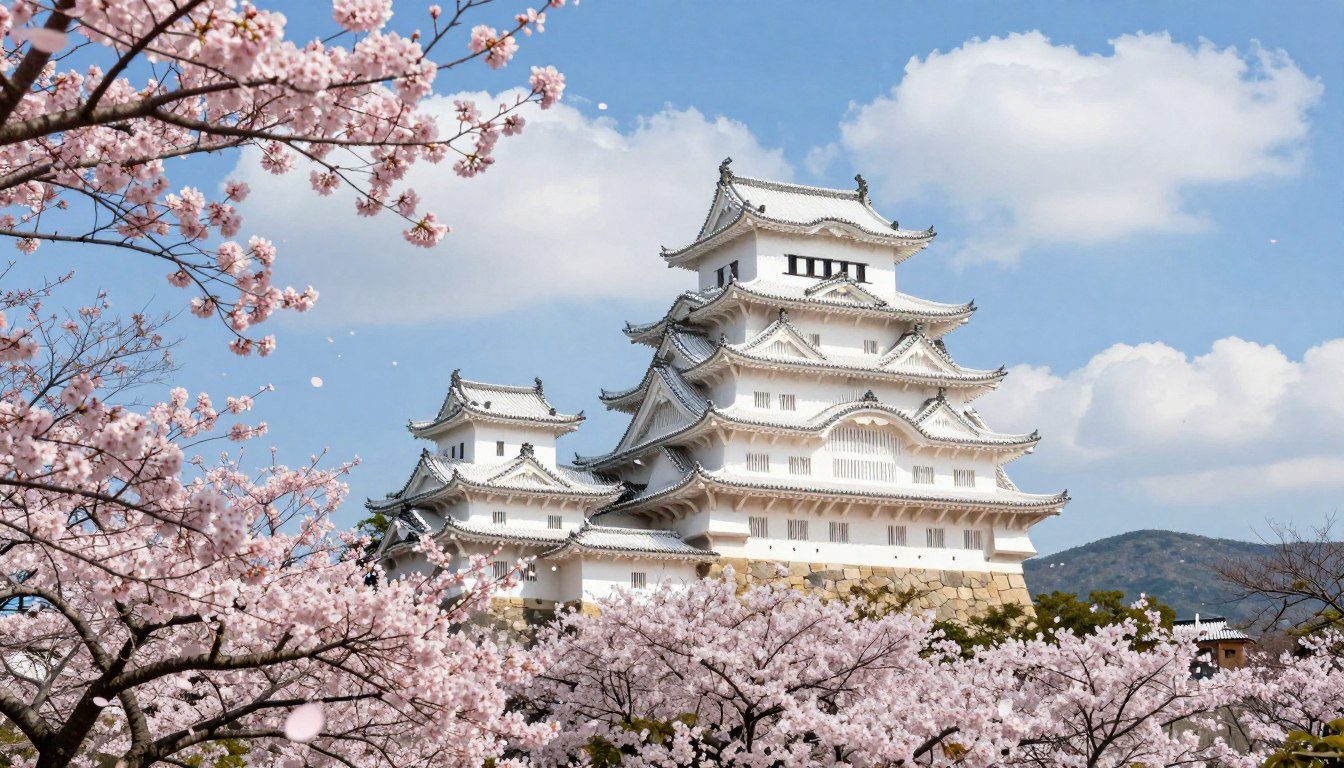
Imagine a brilliant white structure perched on a hill, its elegant form resembling a graceful bird poised for flight. This is the breathtaking sight that welcomes visitors to Japan’s most celebrated fortress, affectionately known as the White Heron Castle.
Recognized as a UNESCO World Heritage Site, it stands as one of the country’s few remaining original castles. Its pristine preservation offers an authentic window into Japan’s feudal past. It is rightly counted among the nation’s premier castles.
Conveniently located in Hyōgo Prefecture, this landmark is an essential stop for any travel itinerary in western Japan. It’s just a short walk from the main station, making it a perfect day trip from cities like Kyoto.
From its intricate defensive design to its legendary gardens, the White Heron Castle provides a multi-layered journey through beauty and history. It is a fortress that truly captures the timeless spirit of the nation.
Historical Evolution and Legacy
Its journey from a strategic military outpost to a celebrated cultural treasure spans nearly seven hundred years of Japanese history.
Early Beginnings and Fortification History
The fortress began as a simple hilltop fort in 1333. Over the years, it was rebuilt and expanded by powerful lords.
A major transformation happened between 1601 and 1609. The project created the sprawling castle complex we see. It required an astounding 2.5 million man-days of labor.
UNESCO World Heritage Recognition and Preservation
This site has shown incredible resilience. It survived the bombing of Himeji City in World War II and a major earthquake in 1995.
Its global importance was confirmed in 1993. It was registered as a UNESCO World Heritage Site. A massive restoration from 2010 to 2015 cleaned decades of grime. It brought back the structure’s brilliant white color.
Today, the complex includes 83 buildings. Seventy-four of them are designated Important Cultural Assets. This makes it the most complete example of feudal Japanese architecture from that period.
Art and Architecture of the Fortress
Beyond its defensive purpose, this landmark stands as a monumental work of art and engineering. The architecture represents the peak of Japanese feudal design.
The Main Keep and Tower Complex
The magnificent main keep rises 46.4 meters high at the center. It creates an imposing silhouette against the sky.
Externally, the keep appears to have five stories. It actually contains six floors plus a basement. This clever illusion confused potential attackers.
Three smaller subsidiary keeps form a cluster. They connect via corridors for unified defense. This castle complex is Japan’s largest.
Traditional Design and Craftsmanship
The first floor, or “thousand-mat room,” covers 554 square meters. It once held weapon racks for hundreds of arms.
Upper floors feature stone-throwing platforms and hidden rooms for defenders. The buildings showcase incredible woodwork.
Five structures are designated national treasure sites. They include the main keep and key corridors. This honors their historical and artistic value.
Defensive Mechanisms and Strategic Layout
Approaching the complex, visitors quickly realize that every path, wall, and tower was crafted with one primary goal: to repel invaders. Himeji Castle represents the peak of Japanese military design from the feudal period. Its strategic layout made it virtually impregnable.
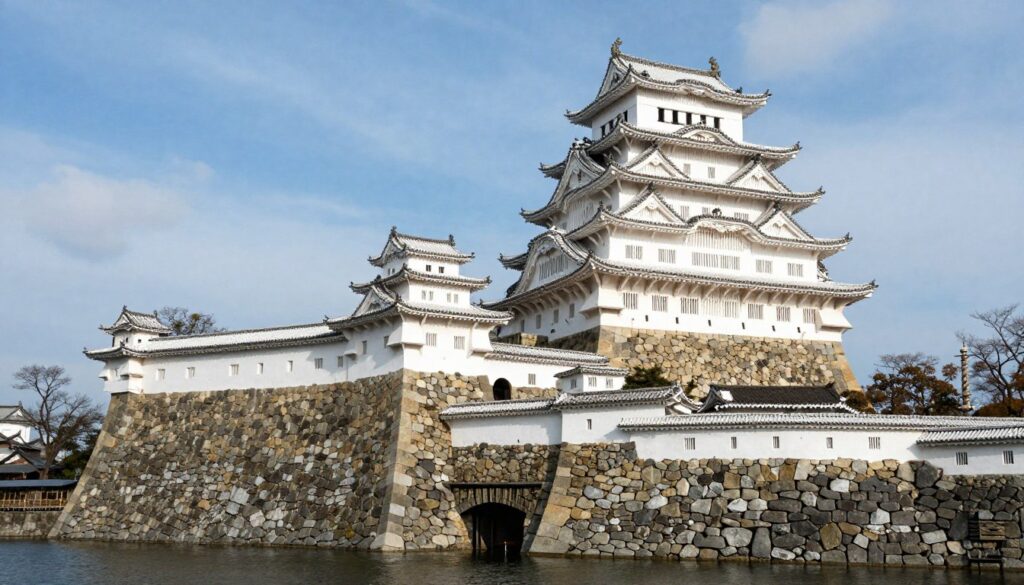
Labyrinthine Paths and Moat Design
The most disorienting feature is the maze of paths. Gates and walls force a spiral route to the central keep. The straight distance to the keep is only 130 meters, but the actual walk stretches over 325 meters.
Originally, 84 gates controlled access. Today, 21 remain. Steep, narrow passages would have slowed attackers dramatically.
Three wide moats once surrounded the complex. They average 20 meters across and are 2.7 meters deep. An inner pond, the Three Country Moat, stored water for firefighting.
| Defensive Feature | Primary Purpose | Notable Data |
|---|---|---|
| Loopholes (Sama) | Safe firing positions | ~1,000 in various shapes |
| Stone Drop Windows | Drop projectiles on attackers | Angled chutes in walls |
| Moat System | Physical barrier & water supply | Avg. width 20m, depth 2.7m |
| Labyrinth Paths | Confuse and delay invaders | Path length 325m vs. 130m direct |
Innovative Defensive Features and Loopholes
Roughly 1,000 loopholes dot the walls. They are circles, triangles, squares, and rectangles. Defenders could shoot matchlock guns or bows safely.
Angled chutes called “stone drop windows” allowed pouring stones or boiling oil. The white plaster exterior also provided excellent fire resistance.
Warehouses in the Waist Quarter stored vital supplies. The Salt Turret alone held about 3,000 bags of salt. Thirty-three wells ensured water during sieges.
Exploring Himeji Castle Grounds
Stepping onto the expansive estate, you enter a world where meticulously landscaped gardens meet ancient stone walls. The fortress complex is enormous, covering 233 hectares. This makes it about fifty times larger than the Tokyo Dome.
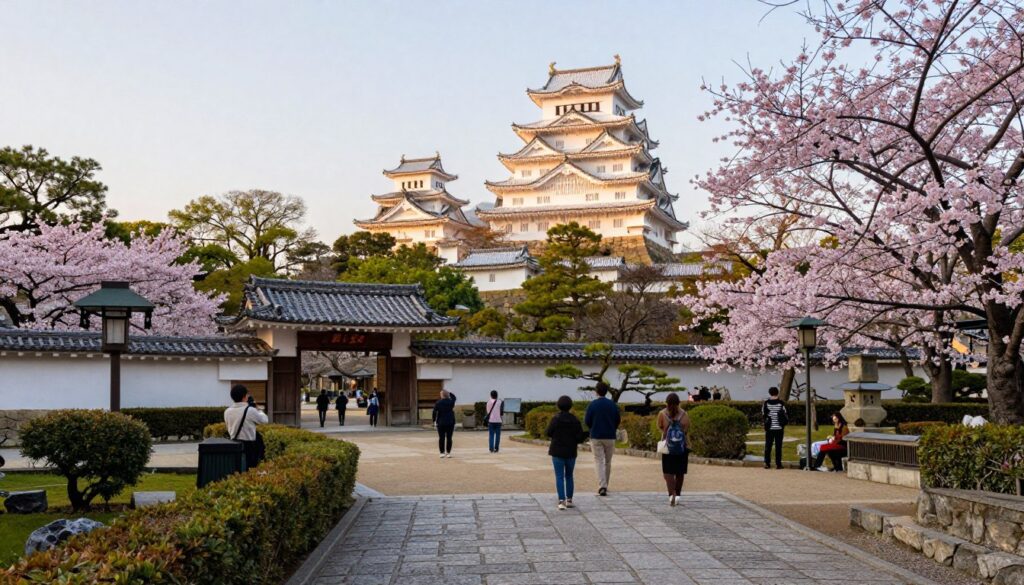
Scenic Gardens and Cherry Blossom Spots
More than a thousand cherry trees bloom each spring. They create a stunning pink canopy perfect for hanami picnics.
Next door, the beautiful Kōko-en Garden awaits. It features nine separate walled areas designed in classic Edo-period styles. This peaceful garden showcases seasonal beauty all year.
Gateways: Otemon and Hishi Gate Experiences
Your visit starts at the grand Otemon Gate. It leads to the free San-no-maru area, a lovely lawn under the blossoms.
The iconic Hishi Gate marks the entrance to the paid section. A ticket costs 1,000 yen. Inside, the west bailey offers a fantastic view of the main keep. Look for the stone monument honoring the colonel who saved this historic site.
For a unique day, visitors can take a boat ride on the inner moat on weekends. It provides a special perspective of the castle complex and its mighty walls.
Cultural Significance and Local Legends
More than stone and plaster, this UNESCO site is woven into the fabric of Japanese culture through captivating legends and a storied presence on the world stage.
The White Heron Castle Tale
Its poetic nickname, White Heron Castle, comes from its brilliant white walls and elegant shape. They look like a majestic bird about to take flight.
This heron castle has also starred in famous movies. It appeared in James Bond’s You Only Live Twice and Akira Kurosawa’s samurai films. The landmark even stood in for Osaka Castle in the TV series Shōgun.
Ghost Stories and Folk Traditions
Spooky stories are part of its long history. The saddest tale is about Okiku, a servant girl. Her ghost is said to count plates by a well on the grounds.
Other legends tell of a generous old woman who donated her millstone for construction. There’s also a tale of a perfectionist carpenter. These myths add a rich, human layer to any tour.
Even today, its cultural impact is strong. A detailed Lego model lets fans everywhere build their own White Heron Castle.
Visitor Experience and Practical Tips
From navigating the historic pathways to savoring local treats, here’s how to optimize your experience at this iconic site.
Navigating Historic Pathways and Tour Information
Your trip starts with an easy journey. The fortress is just one kilometer from Himeji Station. You can enjoy a 20-minute walk or take a quick five-minute bus ride.
Admission to the paid area costs 1,000 yen. This UNESCO landmark is Japan’s most visited castle, drawing millions of visitors each year.
When you tour the main keep, you must remove your shoes. The historic wooden floor is delicate. Staff provide shoe bags, but wear thick socks for grip.
Climbing to the top floor is a must. Each level gets smaller as you ascend. The sixth floor offers a stunning panoramic view over Himeji City.
| Season | Visual Highlights | Crowd Level | Visitor Tip |
|---|---|---|---|
| Spring | Cherry blossoms (late Mar-early Apr) | Very High | Arrive early; tickets may be limited. |
| Summer | Lush green gardens | Moderate | Bring water; it can be hot and humid. |
| Autumn | Vibrant fall foliage | High | Perfect for photography with cooler weather. |
| Winter | Snow-dusted roofs & quiet paths | Low | Best for a peaceful, crowd-free experience. |
Seasonal Highlights and Nearby Attractions
Spring brings beautiful blossoms but big crowds. For a more peaceful time, consider visiting during quieter seasons.
Plan a full day for your visit. Explore the fortress and the lovely Kōko-en Garden next door.
Venture to Mount Shosha on Himeji City‘s edge. A cable car leads to the ancient Engyoji temple complex.
Don’t miss local specialties. Try sweet Tama Tsubaki buns and sample sake from area breweries.
This location makes a perfect day trip from Kyoto or Osaka. It’s a highlight for any travel in western Japan.
Conclusion
Your visit to this legendary fortress concludes not just a tour, but a profound connection with Japan’s living history. As a UNESCO World Heritage Site, it represents the pinnacle of feudal design. Beauty and defense merge here in timeless harmony.
Walking its paths, you follow in the footsteps of samurai. The experience enriches any travel itinerary in western Japan. It is truly one of the nation’s premier Japanese castles.
From spring blossoms to ancient legends, every layer reveals a rich cultural tapestry. Plan your trip to this iconic heritage site. Discover why it remains a world treasure.
Start your journey today. Create lasting memories at this magnificent White Heron fortress.