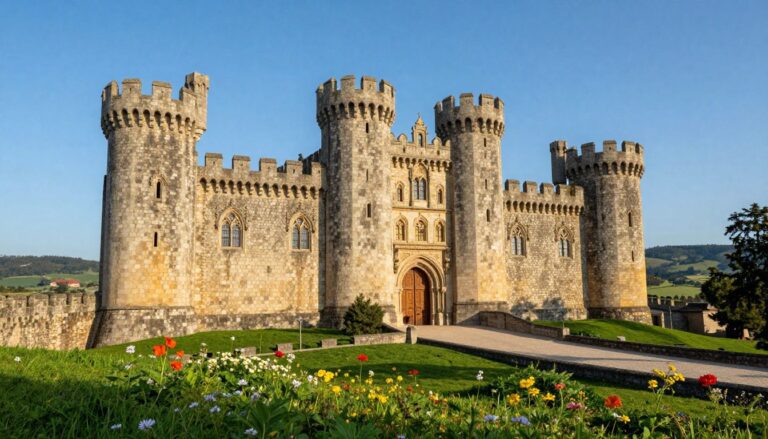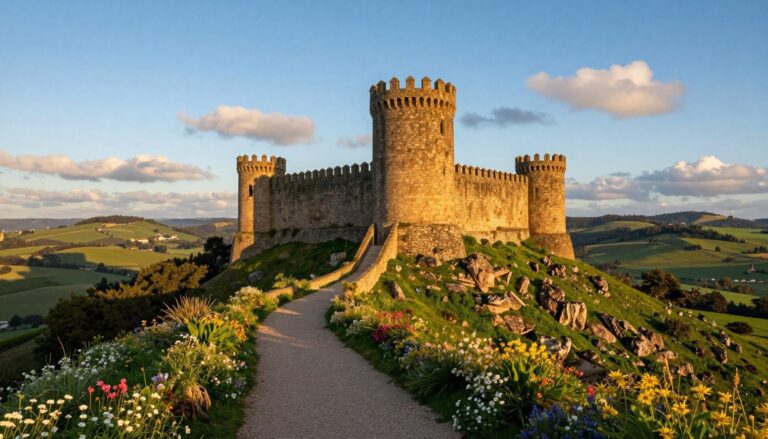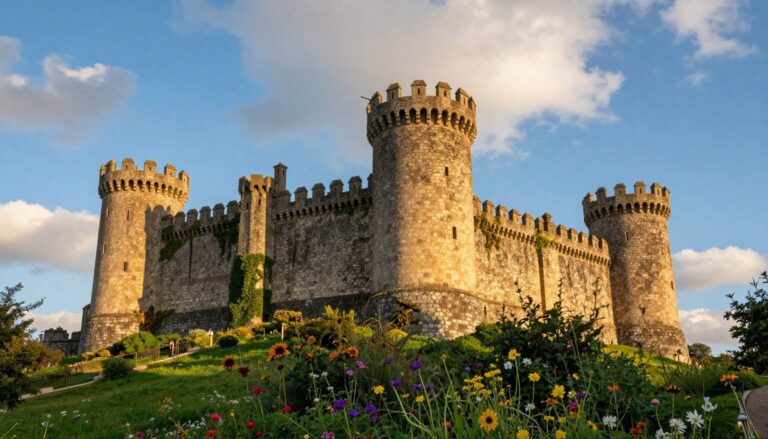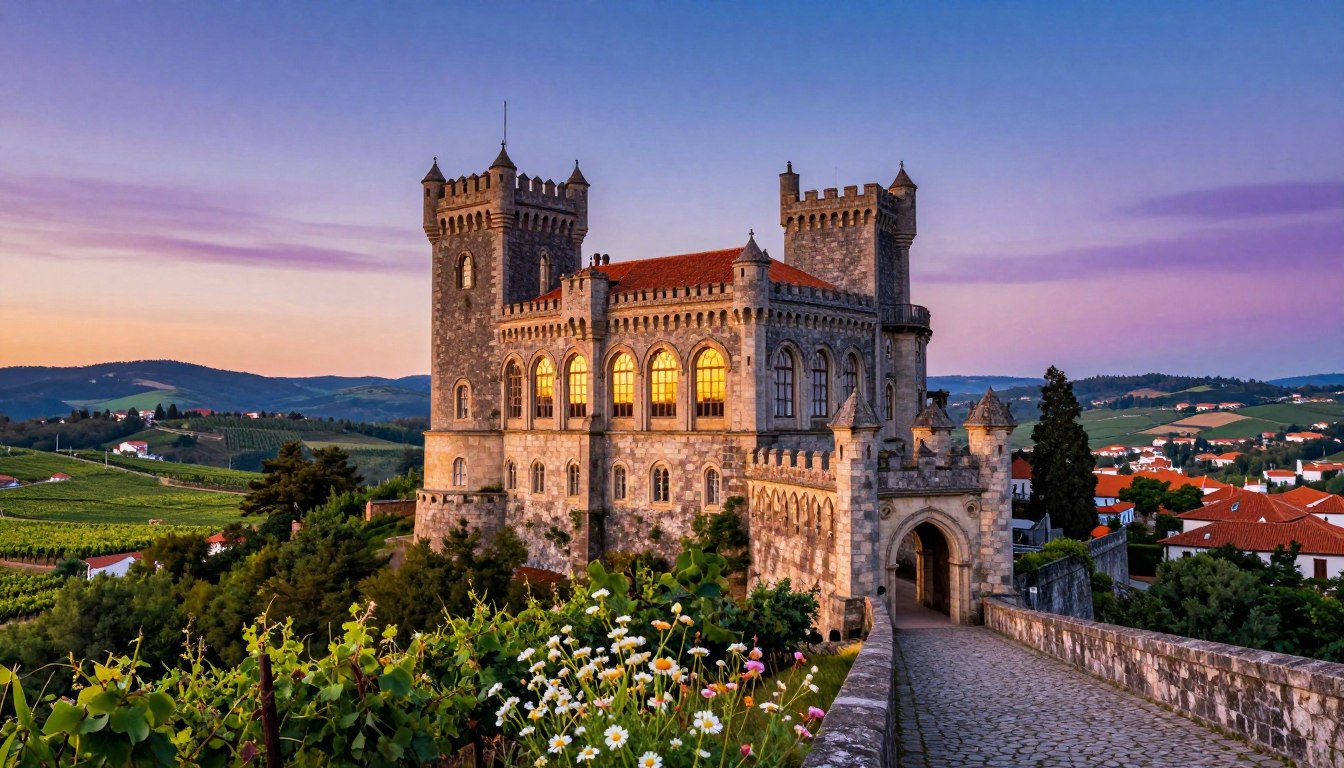
Discover the Fascinating Castles of Portugal
Imagine a country smaller than Indiana dotted with over 200 castles and fortresses. This is the incredible reality of Portugal’s landscape.
These stone sentinels were not built for show. Portugal’s unique position at the edge of Europe made strong defenses a necessity. Each castle played a vital role in protecting borders and important routes.
They were also powerful symbols. For knights and local lords, a mighty castle shouted authority and prestige across the land. This rich history of castles portugal is a story of conquest and grand ambition.
Today, these ancient walls offer a thrilling peek into medieval life. They have transformed from military hubs into beloved landmarks. Visitors can explore impressive architecture and touch the past.
We invite you on a journey to explore ten of the most symbolic castles. They represent different eras and regions, each with a unique tale. Get ready to uncover the fascinating legacy of Portuguese castle heritage.
Introduction: The Timeless Allure of Portuguese Castles
Picture a rugged land where the skyline was once defined not by cities, but by the formidable silhouettes of stone strongholds. These structures were far more than simple buildings; they were the heartbeat of a society shaped by conflict.
Setting the Medieval Scene
Life in medieval Portugal was precarious. Constant territorial disputes meant villages needed refuge. A local lord’s fortress provided this vital security. Its walls offered shelter for entire communities during attacks.
The design of these medieval castles evolved over centuries. You can see layers of history in their stones. Moorish foundations were often expanded with Christian towers. This mix of styles tells a story of changing power.
Walking the ramparts today, you stand where sentries kept watch. You can almost feel the presence of knights who defended these walls. It’s a powerful connection to a distant past.
Cultural and Historical Impact
Building and maintaining these citadels required a feudal system. This strengthened a culture of chivalry and loyalty. The architecture itself became a symbol of authority and resilience.
This legacy of construction over many centuries created a unique heritage. Portuguese medieval castles have a distinct character. They reflect a people’s ingenuity in the face of endless challenges. Understanding this history deepens our appreciation for their enduring strength.
Historical Overview: How Castles Shaped Portugal’s Landscape
The transformation of Portugal’s castles mirrors the nation’s own journey from a contested territory to an independent kingdom. Their story is one of adaptation and strategic genius.
From Moorish Foundations to Royal Residences
In the 8th and 9th centuries, Moorish builders established the first strongholds. They chose strategic hilltops for their fortress structures. Their sophisticated walls and surveillance systems were masterpieces of defense.
The 12th century brought dramatic change. Afonso Henriques, Portugal’s first king, led the Reconquista. His forces captured key Moorish sites, like Castelo dos Mouros in 1147.
Christian rulers then adapted these captured strongholds. They expanded them with new towers and keeps. The original defensive walls were often integrated into the new designs.
As borders stabilized over the next century, some castles evolved. They shifted from purely military use to become royal residences. This architectural history visible in the stone tells a broader story of national formation.
Castelo de Óbidos – A Gem on a Hill
Few Portuguese castles capture the imagination quite like the hilltop gem of Castelo de Óbidos. This magnificent fortress stands guard over the charming medieval town that shares its name, creating one of the country’s most enchanting experiences.
Architectural Highlights and Ramparts
The entrance to the castle is dominated by an imposing gate flanked by two cylindrical towers. These welcome visitors into a perfectly preserved medieval world. Inside the castle walls, you’ll find narrow cobbled streets with colorful flower-adorned houses.
The highlight for many visitors is walking along the ramparts. You can freely stroll the crenellated fortifications while enjoying breathtaking views of the white-washed town below. Don’t miss the 12th-century Church of Santa Maria inside the castle walls, featuring Baroque interiors with gilded altars.
Legends and Annual Festivals
This castle has a unique royal history. Starting in the 14th century, it became a traditional wedding gift to Portuguese queens. This earned it the romantic nickname “Prison of the Queens.”
The castle comes alive during its annual medieval festival. The entire town transforms into a bustling marketplace with armored knights and period-costumed artisans. It’s an immersive experience that truly transports you back in time.
From its position hill overlooking the landscape to its rich heritage, Castelo de Óbidos remains a must-see destination that beautifully preserves Portugal’s medieval past.
Exploring Castelo dos Mouros in Sintra
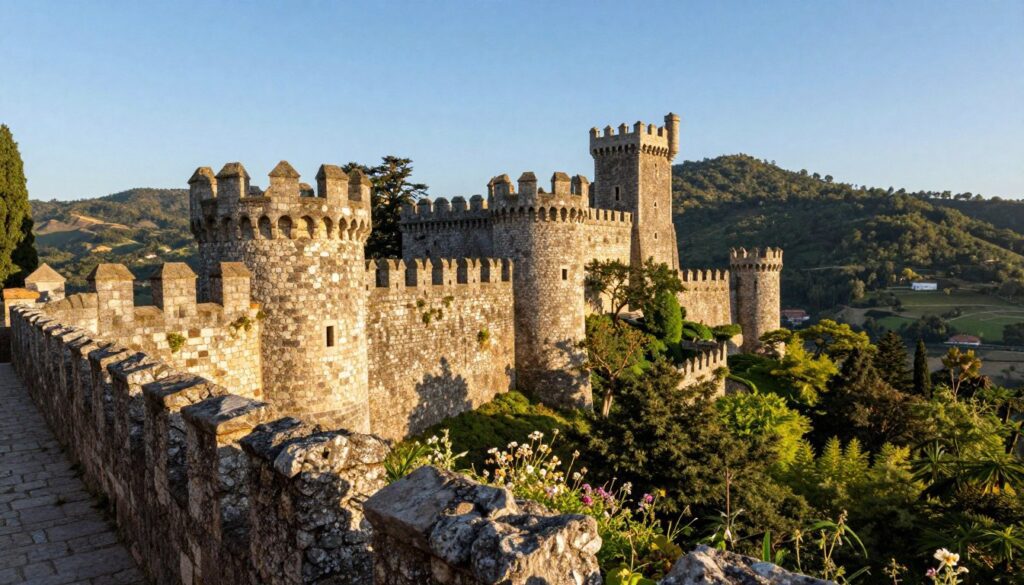
Perched dramatically on the Sintra hills, Castelo dos Mouros stands as a testament to Moorish military genius. This 8th-century fortress offers a spectacular example of defensive architecture with breathtaking panoramic views.
Moorish Fortifications and Cistern Systems
Berber and Arab builders constructed this strategic fortress to control routes to Lisbon. The massive stone walls snake across hilltops, featuring watchtowers and crenellated towers for maximum surveillance.
An ingenious underground cistern system carved into rock allowed the castle to withstand prolonged sieges. Carved silos stored grain within the Islamic Quarter discovered between the walls.
| Feature | Moorish Period | Christian Adaptation | Modern Significance |
|---|---|---|---|
| Defensive Walls | Original 8th-century construction | Integrated into Christian defenses | UNESCO World Heritage site |
| Water Systems | Underground cisterns | Maintained functionality | Archaeological marvel |
| Strategic Position | Control of Lisbon routes | Key Reconquista victory | Panoramic tourist attraction |
Panoramic Views over the Sintra Hills
The castle‘s hilltop location provides stunning views of the surrounding landscape. Visitors can see all the way to the city of Lisbon on clear days.
After its 1147 conquest, the Church of São Pedro de Canaferrim was built between the defensive rings. The site shares similarities with Castelo São Jorge in its strategic importance.
Today, the Historical Interpretation Centre reveals stories from Neolithic times through the Middle Ages. This makes Castelo São Jorge’s Sintra counterpart an unforgettable journey through time.
Castelo de Guimarães: Cradle of a Nation
Known affectionately as the ‘Cradle of the Nation,’ Castelo de Guimarães holds a special place in Portuguese hearts. This 10th century fortress represents where the country’s identity truly began.
Royal Heritage and Founding Myths
The legendary connection to Afonso Henriques, Portugal’s first king, gives this castle its profound significance. Tradition says he was born within these walls in 1111.
Visitors can explore well-preserved spaces that bring medieval life into focus. The inner courtyard, former kitchens, and chapel tell stories of daily existence centuries ago.
Massive stone walls and multiple defensive towers showcase brilliant military design from the 10th century. Moats and battlements completed the formidable defenses.
Cultural Significance in Modern Times
Today, Castelo de Guimarães thrives with vibrant cultural programming. Medieval festivals and historical re-enactments offer immersive experiences of Portugal’s glorious past.
The surrounding UNESCO World Heritage quarter features cobbled streets and traditional houses. This creates a comprehensive medieval atmosphere that complements the castle visit perfectly.
More than just ancient stone, this fortress remains a living symbol of national pride. It continues to inspire visitors in the northern region where Portugal began.
History of Castles in Portugal: Medieval Defense and Innovation
Beyond their romantic appearances, Portuguese strongholds served as sophisticated military machines designed for survival and conquest. These structures evolved from simple defensive posts into complex systems that protected entire regions.
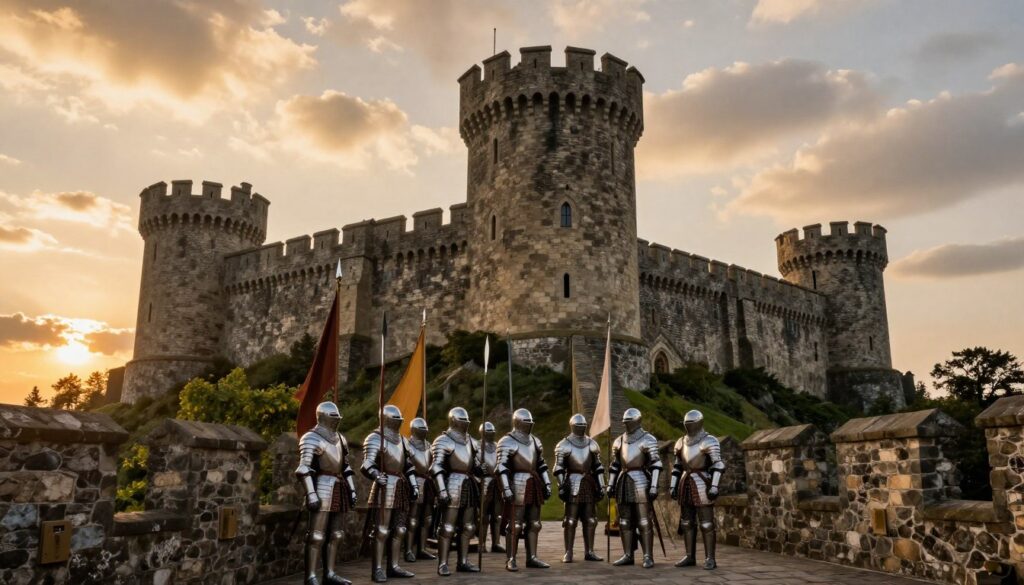
Builders combined Moorish and Christian design traditions to create unique fortress architecture. They developed advanced wall systems with strategic tower placements that allowed for better surveillance. Underground cisterns and grain storage areas ensured long-term sustainability during sieges.
Strategic Roles in the Reconquista
During the 12th century Reconquista, these fortifications became crucial staging points. Christian forces used captured Moorish castles as bases to push southward. Each conquered stronghold helped consolidate territorial gains along the expanding border.
The network of castles formed defensive chains that protected Portugal’s sovereignty. Communication systems between fortifications allowed rapid response to threats. This medieval castle network demonstrated remarkable strategic thinking for its time.
These structures also served important social functions beyond military defense. They acted as administrative centers and symbols of feudal authority. Studying them today offers invaluable insights into medieval life and construction techniques.
The Strategic Castles of Tomar and Almourol
Among Portugal’s most enigmatic medieval sites stand two castles that reveal the secretive world of the Knights Templar military order. Both Castelo de Tomar and Castelo de Almourol date to the 12th century and showcase remarkable engineering.
Templar Legacies and Architectural Marvels
Castelo de Tomar began as a Templar stronghold and later expanded under the Order of Christ. Its heart contains the Charola, a unique circular church where Knights Templar worshipped. This architectural marvel blends Romanesque and Gothic styles with stunning medieval frescoes.
The complex features massive ramparts, crenellated towers, and sophisticated defenses. Visitors can explore secret tunnels and underground passages that demonstrate advanced 12th century military thinking. The later addition of the Convento de Cristo monastery created a spiritual and defensive masterpiece.
Meanwhile, Castelo de Almourol creates a dramatic presence on a small island in the middle Tagus River. Accessible only by traditional boat, this island castle features imposing stone walls and a commanding keep. The Knights Templar selected this strategic location for maximum defensive advantage.
| Templar Features | Castelo de Tomar | Castelo de Almourol | Modern Significance |
|---|---|---|---|
| Construction Period | 12th century start | 12th century | UNESCO World Heritage Site |
| Strategic Purpose | Protect pilgrimage routes | Control Tagus River access | Major tourist attraction |
| Architectural Style | Romanesque-Gothic fusion | Military fortress design | Preserved medieval legacy |
| Unique Features | Charola circular church | Island location | Boat access experience |
Both castles reflect the Knights Templar‘s dual mission of spiritual protection and territorial defense. Their enduring presence along the Tagus River continues to inspire visitors exploring Portugal’s rich medieval heritage.
Castelo de Bragança: Border Battles and Regal Fortifications
Standing guard over Portugal’s northeastern frontier, Castelo de Bragança embodies centuries of border tension and royal ambition. This formidable fortress dates to the 12th century, built specifically to defend the volatile border with Spain.
The castle‘s imposing defensive architecture features massive stone walls and watchtowers designed to withstand prolonged sieges. Every modification to these structures reflects lessons learned from centuries of conflict in this strategic region.
Defensive Architecture and Regional Conflicts
This northern stronghold served a dual purpose as both military bastion and royal residence. The powerful Bragança family lived here, eventually producing Portuguese monarchs. Their presence transformed the castle from pure defense to a center of nobility.
Inside the protective walls, visitors discover charming patios and richly decorated rooms. Cobbled passageways connect spaces that reveal how aristocracy lived within this secure location.
The magnificent Menagem Tower dominates the complex. As the tallest structure, it offers spectacular panoramic views across the town of Bragança and surrounding countryside. This vantage point illustrates why builders chose this spot for maximum defensive advantage.
Today, the castle houses a museum showcasing the region‘s unique heritage. Exhibits feature ancient weapons and traditional costumes that tell the story of border life. The annual medieval festival brings Castelo de Bragança alive with knights and artisans, creating an immersive journey into the past.
Remarkable Castles of the 13th Century: Marvão and Monsaraz
High above the Alentejo plains, two 13th-century sentinels stand guard over Portugal’s eastern frontier. Castelo de Marvão and Castelo de Monsaraz showcase brilliant defensive architecture from this important period.
Their strategic hilltop location provided unmatched surveillance capabilities. Builders used local stone to create imposing walls that have endured for centuries.
Cultural Festivals and Artisan Traditions
These ancient fortresses pulse with vibrant cultural life. Local artisans maintain traditional crafts within the castle walls.
Visitors discover workshops producing beautiful pottery and basketry. The skills passed down through generations keep medieval traditions alive.
Annual medieval festivals transform the town squares into bustling marketplaces. Knights, musicians, and craftspeople create immersive historical experiences.
Scenic Views and Historical Enclosures
The views from these hilltop positions are simply spectacular. Visitors can see across the entire region from the defensive towers.
Within the fortified enclosures, narrow lanes wind between whitewashed houses. A picturesque Gothic church adds to the medieval atmosphere.
Nearby, Castelo de Santa Maria da Feira represents an earlier 11th-century construction. This magnificent castle features beautifully preserved rooms and gardens.
Each castle tells a unique story through its architecture and cultural traditions. They offer unforgettable glimpses into Portugal’s rich defensive heritage.
Conclusion
Exploring Portugal’s castle heritage reveals a timeline of stone and strategy. From Óbidos to Monsaraz, each fortress represents a distinct chapter in a grand national story.
You encounter incredible architectural diversity. The commanding walls of São Jorge offer stunning views of Lisbon. Remote locations provide panoramic views across the countryside.
These structures have survived centuries of conflict. They now stand as treasured monuments. Visiting them means walking through real history.
We encourage you to explore multiple castles across different regions. Discover the unique stories each one tells. This journey offers an unforgettable glimpse into the past that shaped a nation.