Portugal’s UNESCO World Heritage Treasures to Visit
Portugal is a treasure trove of cultural and historical landmarks, boasting a plethora of UNESCO World Heritage sites that attract visitors worldwide. The country’s rich heritage is reflected in its historic centers, picturesque landscapes, and cultural treasures.
From the historic centers of Porto and Lisbon to the breathtaking landscapes of the Azores and Madeira, Portugal’s cultural heritage is a testament to its diverse history. This article will guide you through the must-see sites in Portugal, showcasing the country’s most remarkable destinations.
Key Takeaways
- Explore Portugal’s historic centers, such as Porto and Lisbon.
- Discover the breathtaking landscapes of the Azores and Madeira.
- Experience the rich cultural heritage of Portugal.
- Visit the must-see sites that make Portugal a unique destination.
- Uncover the historical landmarks that showcase Portugal’s diverse past.
The Rich Cultural Legacy of Portugal
The cultural legacy of Portugal is reflected in its numerous UNESCO World Heritage sites. Portugal is renowned for its historic landmarks, which are not only significant to the country’s history but also contribute to its cultural identity.
The Significance of UNESCO World Heritage Status
The Significance of UNESCO World Heritage Status is crucial in understanding the importance of these sites. UNESCO World Heritage status is awarded to sites that are considered to have cultural, natural, or mixed (both cultural and natural) significance.
“The designation of a UNESCO World Heritage site is a recognition of a site’s outstanding universal value.”
Receiving this designation not only promotes tourism but also fosters a sense of pride and responsibility among local communities to preserve their cultural heritage.
Overview of Portugal’s 17 UNESCO Sites
Portugal is home to 17 UNESCO World Heritage sites, each with its unique history and cultural significance. Some of the notable sites include the Historic Centre of Porto, the Jerónimos Monastery, and the Prehistoric Rock Art Sites in the Côa Valley.
| UNESCO Site | Location | Year Designated |
|---|---|---|
| Historic Centre of Porto | Porto | 1996 |
| Jerónimos Monastery | Lisbon | 1983 |
| Prehistoric Rock Art Sites in the Côa Valley | Côa Valley | 1998 |
Historic Center of Porto: A Riverside Gem
The Historic Center of Porto, a UNESCO World Heritage Site, is renowned for its architectural beauty and historical significance. This captivating area is characterized by its picturesque riverside quarter, historic buildings, and vibrant cultural scene.
The Ribeira District and Dom Luís I Bridge
The Ribeira district is a highlight of Porto’s Historic Center, known for its colorful buildings, narrow streets, and lively atmosphere. Visitors can enjoy a stroll along the Douro River and admire the iconic Dom Luís I Bridge, which connects Porto to Vila Nova de Gaia.
Porto Cathedral and Clérigos Tower
The Porto Cathedral, with its Romanesque architecture, is another significant landmark in the Historic Center. Nearby, the Clérigos Tower offers panoramic views of the city, making it a must-visit attraction for those interested in exploring Porto’s rich history.
Local Gastronomy and Wine Experiences
Porto is famous for its local gastronomy and wine, particularly Port wine. Visitors can enjoy traditional Portuguese cuisine in the many restaurants in the Ribeira district and explore wine cellars in Vila Nova de Gaia.
| Landmark | Description |
|---|---|
| Ribeira District | Colorful buildings and lively atmosphere |
| Dom Luís I Bridge | Iconic bridge connecting Porto to Vila Nova de Gaia |
| Porto Cathedral | Romanesque architecture and historical significance |
| Clérigos Tower | Panoramic views of the city |
Lisbon’s Magnificent Monuments
As one of Europe’s oldest cities, Lisbon boasts an array of magnificent monuments that are steeped in history.
Lisbon, the capital city of Portugal, is a treasure trove of historical landmarks that attract visitors from around the world. The city’s rich cultural heritage is reflected in its famous monuments Portugal, which are a testament to its significance in Portuguese history.
Jerónimos Monastery: Manueline Masterpiece
The Jerónimos Monastery is one of Lisbon’s most iconic landmarks, exemplifying the Manueline style of architecture. Built in the 16th century, it honors Vasco da Gama’s voyage to India and is a symbol of Portugal’s Age of Exploration.
Belém Tower: Guardian of the Tagus
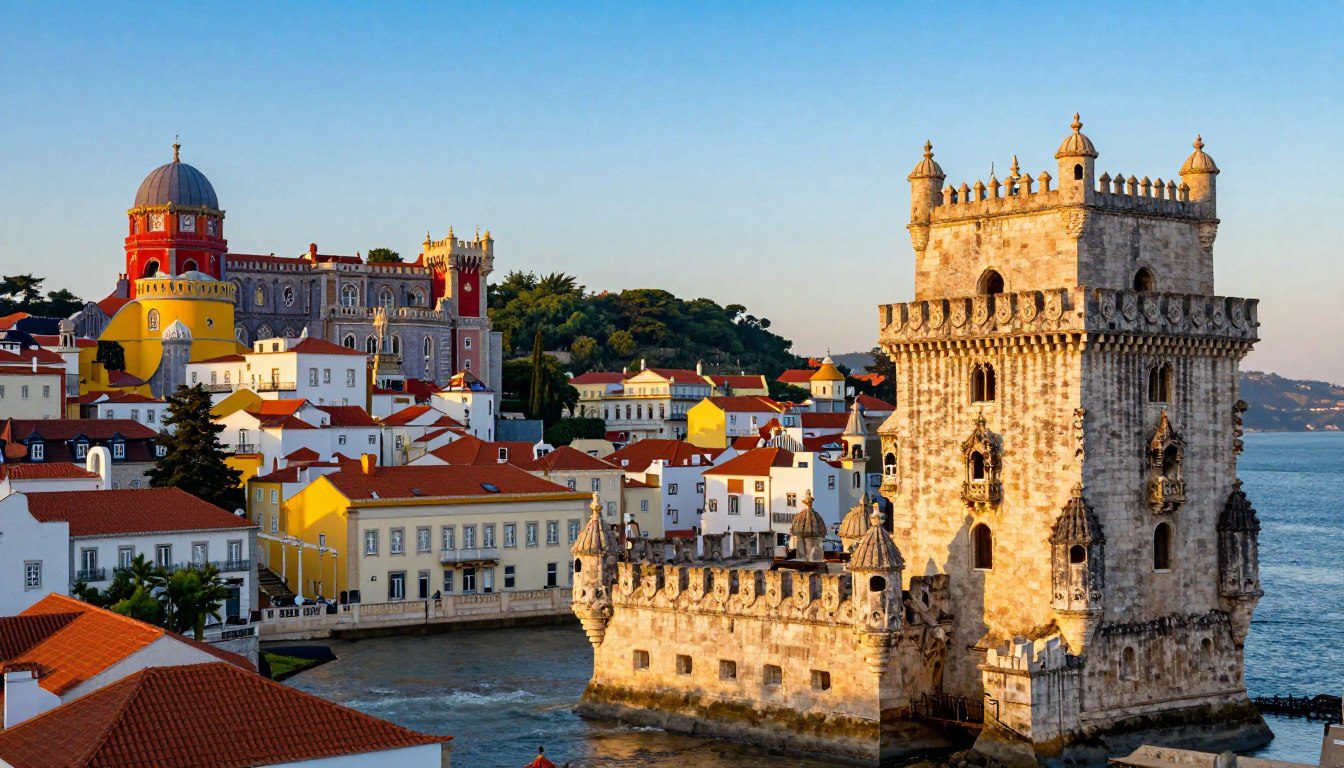
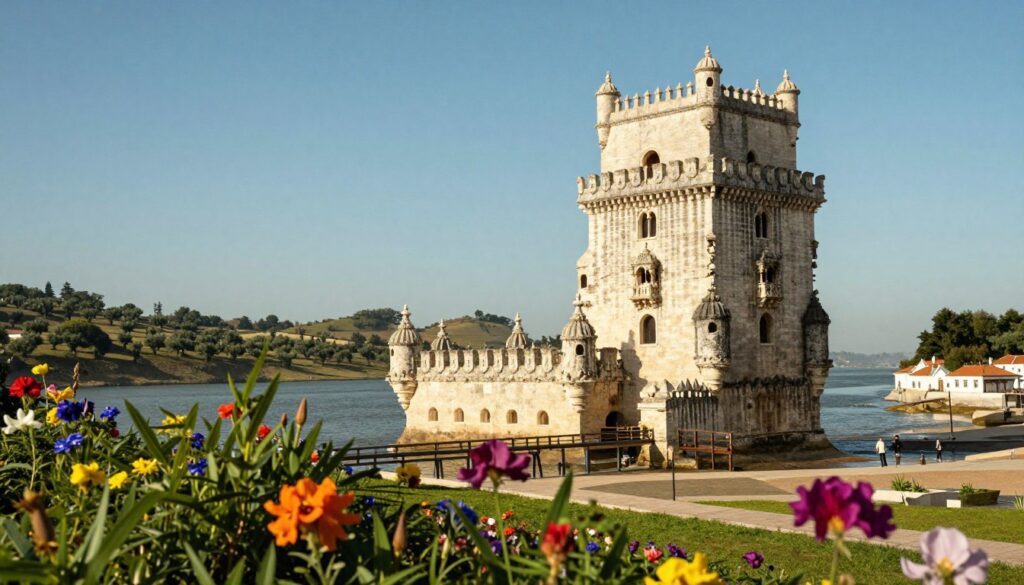
The Belém Tower is another significant historic landmark in Portugal, standing as a reminder of Portugal’s maritime history. This fortified tower is a UNESCO World Heritage Site and represents the country’s rich cultural legacy.
Practical Visitor Information
To make the most of your visit to Lisbon’s must-see sites in Portugal, it’s essential to plan ahead. Here are some practical tips:
Best Times to Visit
Visiting early in the morning or later in the afternoon is recommended to avoid the crowds and heat.
Transportation Options
Lisbon is well-connected by public transport, including trams and buses. The metro is also a convenient option for reaching many of the city’s historic sites.
UNESCO World Heritage Sites Portugal: Complete Regional Guide
Exploring Portugal’s UNESCO World Heritage sites is a journey through the country’s varied regions, each with its own distinct cultural and historical treasures. Portugal’s diverse regions are home to a wealth of cultural and natural heritage sites recognized by UNESCO, showcasing the country’s rich history and cultural diversity.
Northern Portugal Heritage Treasures
Northern Portugal is home to several UNESCO World Heritage sites, including the Historic Centre of Porto, a riverside gem that showcases the region’s rich cultural heritage. The Ribeira district, with its colorful buildings and lively atmosphere, is a must-visit, along with the iconic Dom Luís I Bridge. Visitors can also explore the Porto Cathedral and Clérigos Tower, which offer stunning views of the city.
Central Portugal Cultural Landmarks
Central Portugal is dotted with cultural landmarks that reflect the region’s historical significance. The University of Coimbra, a historic seat of learning, is one of the region’s most notable UNESCO World Heritage sites. Visitors can explore the Joanina Library and the Alta and Sofia complexes, which showcase the region’s academic traditions and architectural heritage.
Southern Portugal and Island Wonders
Southern Portugal and the islands of Azores and Madeira are home to a range of natural and cultural wonders. The Laurisilva forests of Madeira, a UNESCO World Heritage site, are a unique example of a subtropical rainforest. Visitors can also explore the historic center of Évora, which features Roman ruins and medieval architecture.
| Region | UNESCO World Heritage Sites | Key Attractions |
|---|---|---|
| Northern Portugal | Historic Centre of Porto | Ribeira district, Dom Luís I Bridge |
| Central Portugal | University of Coimbra | Joanina Library, Alta and Sofia complexes |
| Southern Portugal and Islands | Laurisilva forests of Madeira | Subtropical rainforest, historic center of Évora |
Portugal’s UNESCO World Heritage sites offer a wealth of cultural and natural heritage experiences, from historic centers to natural wonders. By exploring these sites, visitors can gain a deeper understanding of Portugal’s rich history and cultural diversity.
Historic Center of Évora: Roman Ruins to Medieval Splendor
The Historic Center of Évora is a testament to Portugal’s rich cultural heritage, boasting an array of Roman ruins and medieval splendor. This UNESCO World Heritage site is a must-visit destination for anyone interested in historic landmarks in Portugal.
Évora’s historic center is a treasure trove of architectural styles, ranging from Roman temples to Gothic cathedrals. Visitors can explore the city’s rich history by visiting its many monuments.
Temple of Diana and Roman Heritage
The Temple of Diana is one of Évora’s most famous landmarks, a well-preserved Roman temple that dates back to the 1st century AD. This famous monument in Portugal is a testament to the city’s Roman heritage.
Cathedral of Évora and Religious Monuments
The Cathedral of Évora is another significant landmark, showcasing a mix of Gothic, Romanesque, and Baroque architectural styles. The cathedral is surrounded by other religious monuments, highlighting the city’s rich spiritual heritage.
The Chapel of Bones and Local Traditions
The Chapel of Bones is a unique and fascinating monument, featuring thousands of human bones arranged in intricate patterns. This chapel is a reflection of Évora’s local traditions and cultural practices.
| Landmark | Description | Historical Significance |
|---|---|---|
| Temple of Diana | Roman temple from the 1st century AD | Showcases Évora’s Roman heritage |
| Cathedral of Évora | Gothic, Romanesque, and Baroque architectural styles | Highlights the city’s spiritual heritage |
| Chapel of Bones | Thousands of human bones arranged in patterns | Reflects local traditions and cultural practices |
Sintra’s Cultural Landscape: Romantic Palaces and Gardens
Nestled in the hills of Portugal, Sintra’s cultural landscape is a treasure trove of architectural wonders and natural beauty. This enchanting region is home to some of Portugal’s most revered UNESCO World Heritage sites, making it a must-visit destination for anyone interested in history, architecture, and natural beauty.
Pena Palace: A Colorful Fairytale
Pena Palace is a vibrant and whimsical palace that seems to have stepped straight out of a fairytale. Its striking colors and eclectic architecture make it a standout among Portugal’s historical monuments. Visitors can explore the palace’s opulent interiors, which feature an array of decorative arts and furnishings.
Moorish Castle and Historic Center
The Moorish Castle, with its rugged stone walls and towers, offers breathtaking views of the surrounding landscape. The historic center of Sintra is equally captivating, with its charming streets, quaint shops, and picturesque cafes. Together, they form a unique cultural and historical experience.
Quinta da Regaleira and Its Mystical Symbols
Quinta da Regaleira is a mysterious and fascinating estate that is replete with symbolic architecture. The site is particularly known for its underground tunnels and initiation well, which are steeped in mystery and intrigue.
The Initiation Well
The Initiation Well is a striking feature of Quinta da Regaleira, with its deep, spiral staircase that descends into the earth. This enigmatic structure is believed to have been used for ceremonial purposes.
Hidden Tunnels and Grottos
Quinta da Regaleira is also home to a network of hidden tunnels and grottos, which add to the site’s mystique and allure. Visitors can explore these subterranean passages and discover their secrets.
| Attraction | Description | Must-see Features |
|---|---|---|
| Pena Palace | A colorful palace with eclectic architecture | Opulent interiors, decorative arts |
| Moorish Castle | Rugged stone walls and towers with panoramic views | Historic significance, views of Sintra |
| Quinta da Regaleira | Estate with symbolic architecture and underground tunnels | Initiation Well, hidden tunnels, grottos |
Alto Douro Wine Region: Terraced Vineyards and Port Wine
With its terraced vineyards and historic significance, the Alto Douro Wine Region stands as a prominent cultural landmark in Portugal. This UNESCO World Heritage site is celebrated not only for its breathtaking landscapes but also for its role in producing some of the world’s most renowned wines, including Port wine.
The Alto Douro Wine Region’s unique cultural heritage is deeply intertwined with its winemaking traditions. Visitors can explore the region’s rich history and experience the beauty of its terraced vineyards.
The World’s Oldest Demarcated Wine Region
The Alto Douro Wine Region holds the distinction of being the world’s oldest demarcated wine region, with a history dating back to the 18th century. This designation underscores the region’s importance in the world of wine and its commitment to preserving traditional winemaking practices.
Wine Tourism Experiences and River Cruises
Visitors to the Alto Douro Wine Region can enjoy a variety of wine tourism experiences, including guided tours of vineyards and wine tastings. A river cruise along the Douro River offers a unique perspective on the region’s scenic beauty and historic quintas.
Seasonal Highlights and Photography Opportunities
The Alto Douro Wine Region is a photographer’s paradise, with its picturesque landscapes and changing seasons offering numerous opportunities for capturing stunning images. From the blooming vineyards in spring to the harvest season in autumn, each time of year brings its own unique charm.
Whether you’re a wine enthusiast, a nature lover, or simply looking to explore one of Portugal’s famous monuments, the Alto Douro Wine Region is a must-visit destination that promises an unforgettable experience.
Prehistoric Rock Art Sites in the Côa Valley
The Côa Valley in Portugal is renowned for its ancient rock art, providing a unique glimpse into prehistoric life. This significant archaeological site is a testament to the region’s rich cultural heritage.

Ancient Open-Air Art Gallery
The Côa Valley is home to an extensive collection of prehistoric rock art, featuring over 3,000 engraved rock panels. These ancient artworks date back to the Upper Paleolithic period, making them some of the oldest and most significant in the world.
- Unique Artistic Expressions: The rock art showcases a variety of animals, including horses, ibex, and deer, often depicted in dynamic poses.
- Archaeological Significance: The Côa Valley’s rock art provides valuable insights into the lives of early humans, their interactions with the environment, and their artistic expressions.
Visiting the Côa Museum and Archaeological Park
Visitors to the Côa Valley can explore the Côa Museum and Archaeological Park, which offers a comprehensive look at the region’s prehistoric heritage. The museum features exhibits on the history and significance of the rock art, while the archaeological park allows visitors to view the rock art sites up close.
- Guided tours are available, providing in-depth information about the rock art and the archaeological context.
- The park also includes reconstructed prehistoric habitats, giving visitors a glimpse into the lives of the people who created the rock art.
By visiting the Côa Valley, travelers can experience a significant aspect of Portugal’s cultural heritage, making it a must-visit destination for anyone interested in history and archaeology.
University of Coimbra: Historic Seat of Learning
The University of Coimbra stands as a testament to Portugal’s rich academic heritage. With its roots dating back to 1290, it is one of the oldest universities in Europe, boasting a long history of academic excellence and cultural significance.
The Joanina Library and Academic Traditions
The University’s Joanina Library is a highlight, renowned for its Baroque architecture and extensive collection of rare books. The library’s ornate interior and historic significance make it a must-visit for scholars and tourists alike. Coimbra’s academic traditions are still celebrated today, with the University playing a significant role in Portugal’s cultural identity.
Exploring the Alta and Sofia Complexes
Visitors can explore the Alta and Sofia complexes, which are steeped in history and architectural beauty. The Alta complex houses several historic buildings, including the University’s main facilities, while the Sofia complex is home to the beautiful Sofia Chapel. Together, they offer a glimpse into the University’s rich past and its contribution to Portugal’s heritage.
| Complex | Notable Features | Historical Significance |
|---|---|---|
| Alta Complex | Main University facilities, historic buildings | Central to the University’s academic life |
| Sofia Complex | Sofia Chapel, beautiful architecture | Historic religious and cultural significance |
Visiting the University of Coimbra is a journey through Portugal’s academic and cultural history, making it one of the famous monuments Portugal has to offer. It’s a must-see site in Portugal for anyone interested in exploring the country’s rich heritage.
Natural UNESCO Treasures: Azores and Madeira
Among Portugal’s most prized natural assets are the Azores and Madeira, both celebrated for their unique landscapes and biodiversity. These island groups are not only significant for their natural beauty but also for their cultural heritage, which has been recognized by UNESCO.
The Azores and Madeira are home to some remarkable natural UNESCO treasures. One of the most notable is the Laurisilva Forests of Madeira, a relic of the ancient forests that once covered much of Europe.
Laurisilva Forests of Madeira
The Laurisilva Forests of Madeira are a testament to the island’s rich biodiversity. This UNESCO World Heritage Site is one of the largest surviving areas of laurel forest and is home to numerous endemic species.
Landscape of the Pico Island Vineyard Culture
The Landscape of the Pico Island Vineyard Culture in the Azores is another significant natural and cultural treasure. This unique landscape is characterized by its volcanic soil and a sophisticated system of vineyards protected by walls.
| UNESCO Site | Location | Significance |
|---|---|---|
| Laurisilva Forests | Madeira | One of the largest remaining laurel forests |
| Pico Island Vineyard Culture | Azores | Unique vineyard culture on volcanic soil |
Both the Laurisilva Forests of Madeira and the Landscape of the Pico Island Vineyard Culture are integral to Portugal’s cultural heritage and are among the top UNESCO sites in Portugal.
Conclusion: Planning Your UNESCO Heritage Journey Through Portugal
Portugal’s UNESCO World Heritage sites offer a wealth of cultural, historical, and natural significance, making them a must-visit destination for any traveler. To plan your trip, start by identifying the unesco world heritage sites portugal that are on your bucket list. From the historic centers of Porto and Évora to the stunning landscapes of the Azores and Madeira, there’s a wealth of must-see sites in portugal to explore.
When visit portuguese heritage sites, consider visiting during the shoulder season to avoid crowds and make the most of your trip. Be sure to research practical visitor information, such as guided tours and opening hours, to ensure a smooth journey. With so many incredible sites to discover, planning ahead will help you make the most of your UNESCO heritage journey through Portugal.
From the rich cultural legacy of Lisbon’s magnificent monuments to the natural beauty of the Côa Valley’s prehistoric rock art, Portugal’s UNESCO World Heritage sites have something for everyone. By planning your trip carefully, you can experience the best of Portugal’s history, culture, and natural beauty.